
Humidity and scent are more closely linked than you might think: the warmer the air, the faster aroma molecules evaporate, and the more humid it is, the more a cone absorbs water and burns unevenly. So the same cone can behave differently in Hanoi during the damp spring and in Saigon at a sunny noon. Understanding humidity and scent together helps you choose a sensible dose and avoid disappointment when a scent seems “off”.
Why does temperature change how a scent smells?
Scent is made of tiny molecules that leave a material and reach your nose. The warmer it is, the more easily they escape, which is the physics of vapour pressure. See this overview of vapour pressure for the concept.
For incense, two effects are easy to notice. On hot days scent spreads faster and wider, so one cone can seem stronger. On cold days it spreads slowly and stays close, so the same cone feels quieter.
How do light and heavy notes behave differently?
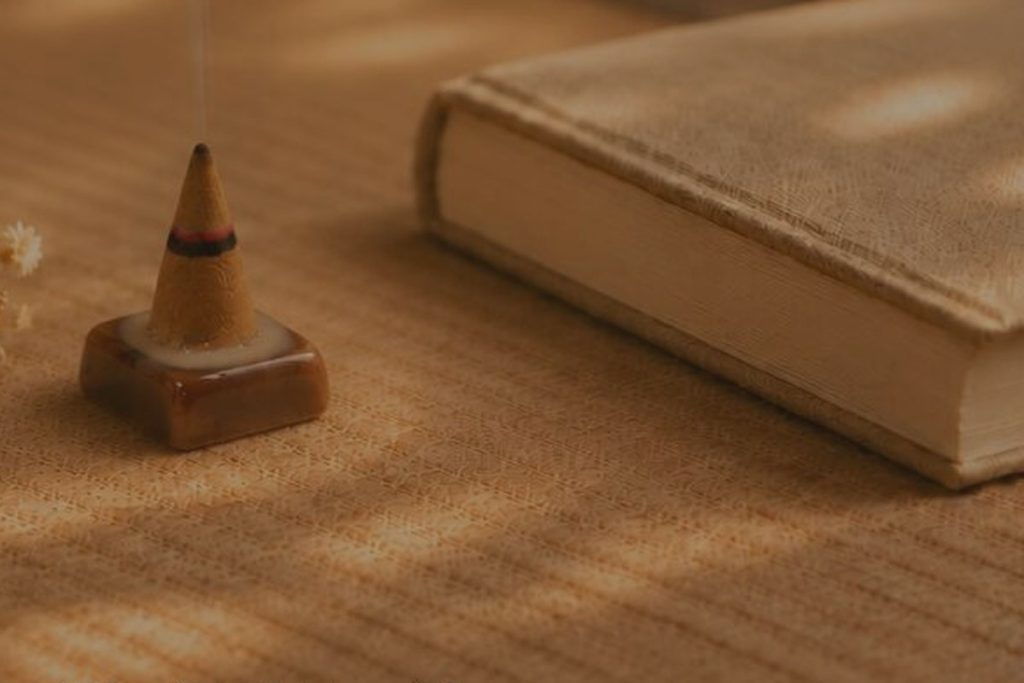
A fragrance has light, quick-evaporating parts (often top notes: herbs, citrus) and heavy, slow ones (base notes: wood, agarwood, resin). In heat the light notes jump out fast, so the opening can seem sharp, even a little harsh to a sensitive nose. In cool air the base notes have time to emerge, so the scent reads rounder and warmer. If a cone seems too loud in summer, try a smaller piece or a lighter group instead of switching it off in frustration.
That is one reason agarwood feels right in cool weather and light herbs in hot weather. Matching scents to the seasons shows how to pair our four groups (Woody, Herbal, Agarwood, Soft & sweet) with the weather.
How do humidity and scent affect cones and what we smell?
Cones are made from herb and wood powders and natural binders, so they tend to take up moisture from the air. In high humidity a cone becomes heavy, burns slowly, may go out midway, and can grow mould if stored badly. In northern Vietnam the damp spring often passes 90% humidity, which is when storage matters most.
As for perception, studies on humidity and smell have not given consistent results, so we make no firm claims. What is easy to observe is that damp air in a closed room holds odours for longer, and scent mixed with a musty smell stops feeling clean. Think of it as a small piece of household care: a dry, aired room lets any scent look its best. Do not try to mask dampness with more incense: dry the space first.
See storing cones in humid weather for sealed-jar and silica-gel tips.
How should you adjust through Vietnam’s seasons?
Vietnam is long and has several climates, so there is no single formula for humidity and scent. Each season gives the same cone its own character, which is worth enjoying rather than worrying about. These are ideas to adapt.
- Damp spring in the north: burn less, pick airy scents, open a window when there is sun, keep cones in a sealed jar.
- Hot, stuffy noon: scent spreads quickly, so a small cone is enough; light herbal suits better than very sweet.
- Southern rainy season (roughly May to November): air is humid and close; ventilate and lean toward Woody or Herbal.
- Cool days: Agarwood and Soft & sweet feel warm and welcome.
For a starting point, try the Scent Finder or browse the shop by group.
What should you do to stay safe?
However humidity and scent shift, the safety basics stay the same.
Hot, closed rooms let smoke linger, so open a window or run a fan gently; see ventilation basics. In damp rooms a cone may burn badly; let it dry rather than relighting repeatedly. If cones keep going out, why cones go out mid-burn can help.
As always: use a heat-proof holder, keep away from curtains and anything flammable, and never leave a flame unattended.
FAQ
Why does incense smell stronger at noon?
Heat helps aroma molecules evaporate faster and travel further, so your nose gets more of them at once.
Should I burn incense in damp weather?
You can, if the cone is dry, the room ventilated and the dose small. Keep cones in a sealed jar and do not burn extra to hide the damp smell.
Is a damp cone still usable?
If there is no mould, leave it somewhere dry and airy for a while. If you see mould or smell something off, discard it.
The same cone, a different weather: scent always speaks to the day it is in.