Taboos when burning incense are spoken advice passed through many Vietnamese families: do not pull a stick out and replant it, do not blow it out by mouth, and so on. There is no single rulebook; each region and home understands them differently. This post retells a few common ones respectfully, and separates them from using relaxing cones at home.
Where do taboos when burning incense come from?
Most of this advice comes from reverence for ancestors and spirits: lighting incense is a solemn act, so people try to stay clean, focused and careful. Over generations such advice becomes habit, and each family sometimes adds its own detail.
We are not scholars of belief, so we present only what several popular sources mention and mark where explanations differ. If your family does it another way, keep your family’s way.
Which taboos are most often mentioned?
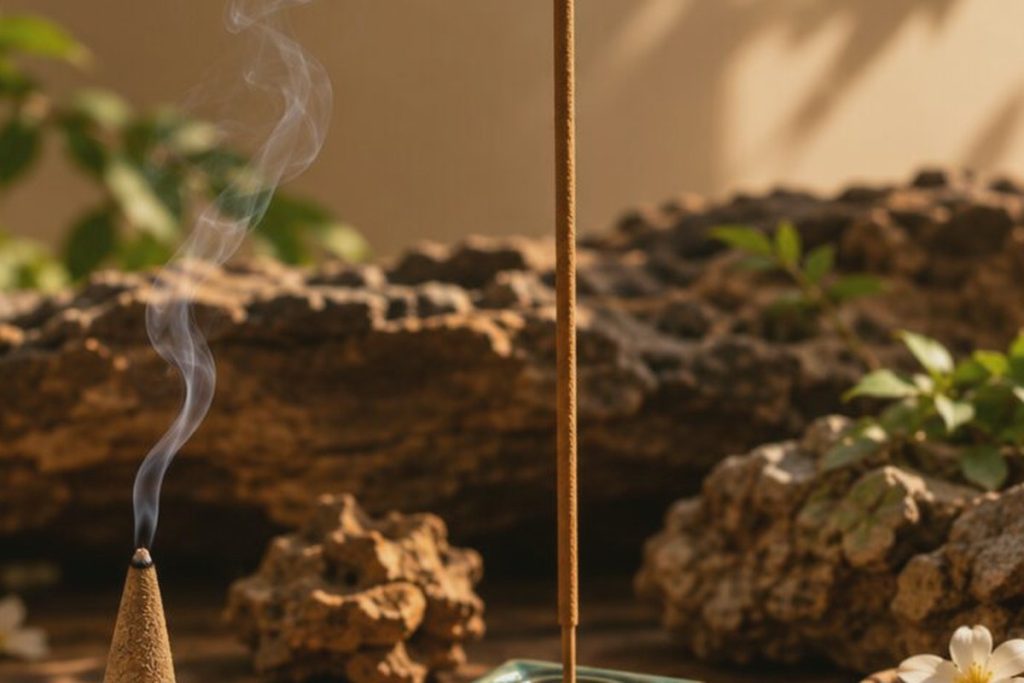
- Do not pull a planted stick out to relight it. Some articles advise that if a stick goes out, relight it in place with a match or lighter rather than removing and replanting it, as a sign of respect.
- Do not blow incense out by mouth. In some families the breath of the mouth is considered unclean, so the stick is left to burn down or fanned gently by hand. We found no single source explaining this, so treat it as household belief.
- Keep hands and dress tidy. Many people wash their hands or straighten clothes first.
- Light with focus. Avoid loud chatter while lighting.
- Never leave incense burning in an empty house. A sensible rule for both spirit and safety.
See also incense on the first and fifteenth and why 1, 3 or 5 sticks, which show how much custom varies.
How is lighting an altar different from relaxing cones?
This is easy to mix up. At an altar, lighting incense carries spiritual meaning, so the advice above is usually kept carefully. A relaxing cone in a room has another purpose: scent and calm, much like brewing tea or lighting a candle.
So putting out a cone with a lid or small snuffer is usually seen as reasonable, especially for safety. If you use both, a simple way is separate tools and a separate place for each, so they do not blur together.
When do taboos and safety meet?
Some advice matches modern safety rules: never leaving incense alone, keeping the worship space clean, and avoiding flammable items nearby all make practical sense. The American Lung Association also recommends ventilation and limiting how much incense is burned indoors (American Lung Association).
Other taboos are symbolic, such as ideas about breath. If a stick falls near something flammable, do not hesitate: safety comes first. Read fire safety with incense.
A gentle way to approach folk advice
Ask the elders at home why they do it, and write the stories down. A grandmother’s explanation often teaches more than a list of rules. If you are just starting, hold on to three things: sincerity, cleanliness, safety.
For a personal relaxation corner, look at cones and ceramic holders. We see that as self-care, separate from worship.
Interestingly, many folk taboos when burning incense, looked at closely, point to two things: slowness and cleanliness. When you light incense you stop what you are doing, wash your hands and speak softly. However the reasons are explained, the result is a small pause in the day, a value anyone can feel.
That is why we prefer to read the advice as a habit of attention rather than a list of prohibitions.
If you ever doubt a taboo, ask the person who taught it to you, or simply ask yourself whether it makes you calmer and safer. That is a fair test for any custom.
FAQ
Why avoid blowing incense out by mouth?
In some families breath from the mouth is considered unclean. We found no consistent source, so it is a household belief.
What if a stick goes out midway?
Some articles advise relighting it in place rather than pulling it out. Follow your family’s way.
Do these taboos apply to relaxing cones?
Usually not, since the purpose differs. Safety rules such as not leaving it unattended, ventilating and using a heat-proof holder still apply.
Understanding why elders advised, then choosing your own way, is still the finest form of respect.