There is no single rule that says you must light exactly one, three or five incense sticks. The meaning of the number of incense sticks is mostly folk belief, and it differs by region, family and religion. The simplest approach is to choose a number you understand and feel sincere about, then keep that habit.
Why do people talk about odd numbers?
Ask an aunt or an uncle in Vietnam and you will often hear: “light an odd number.” In many places, odd numbers are seen as “living” or open, while even numbers are sometimes associated with offerings for the departed or with closure. This is oral tradition, though. Some families follow it, some do not, and it is not fixed.
If you grew up with a different habit, that is fine. Folk belief is soft and layered, blended from ancestor veneration, Buddhism, Daoism and local custom. Reading about it is a bit like reading old tales: to understand more, not to worry about doing it wrong.
One stick: simple and compact
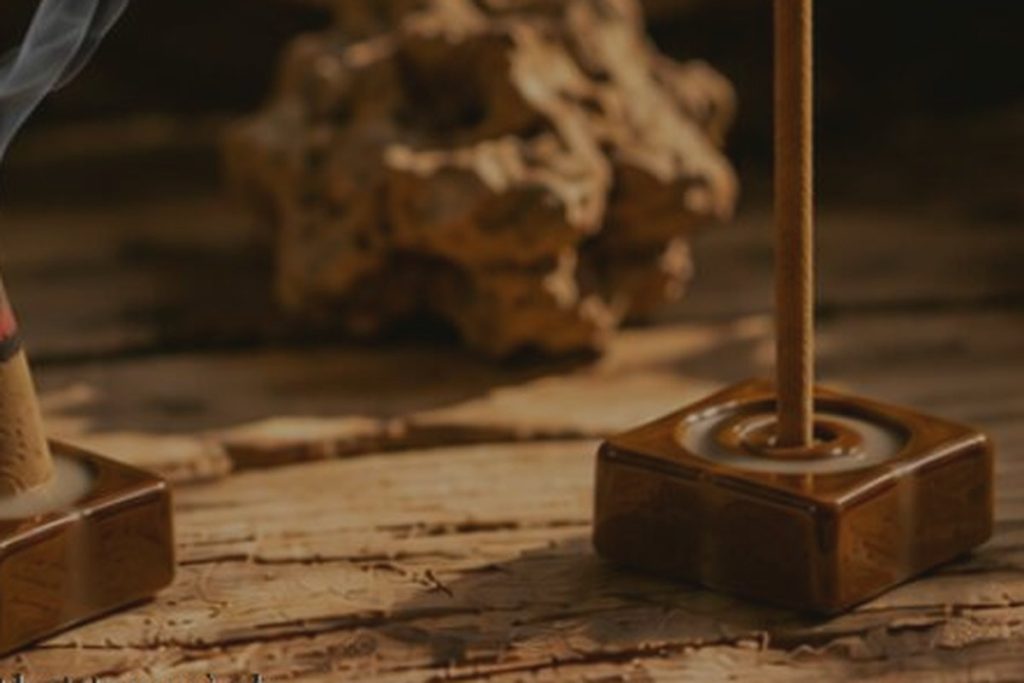
One stick is what many people light when they are on their own, renting a room, or just want to send a short greeting. It is easy to manage and produces less smoke and ash. Some say a single stick shows focus: one heart, one intention. Many families also light one stick at small altars outside the house or at the door.
If you are just starting and do not know your family’s habit, one stick is a gentle place to begin: enough to sit, breathe and say what you want to say.
Three sticks: the most familiar
Three sticks are very common at ancestor altars and in temples. A few readings you may hear:
- In Buddhism, three sticks are often linked to the Three Jewels: Buddha, Dharma, Sangha.
- In folk sayings, three can suggest heaven, earth and humankind.
- Some families see them as three wishes: gratitude, asking permission, and peace for loved ones.
These readings do not exclude each other, and you may find your own meaning. Three sticks also make a balanced picture: one in the middle, one on each side, standing neatly in the burner.
Three sticks are also familiar in temples; see incense in Buddhism.
Five sticks and other numbers
Five sticks are less common in daily life but appear at festivals, communal houses, temples and in some homes. Some link five to the five elements (metal, wood, water, fire, earth); other sources mention the five-part “fragrance of the Dharma body” in Buddhism (discipline, concentration, wisdom, liberation, and insight into liberation). These are inherited explanations rather than a unified standard. Seven or nine sticks are sometimes lit on special occasions.
A practical point matters just as much: more sticks at once means more smoke. In a small room, five sticks burning together can make the air heavy and the eyes sting. If it feels uncomfortable, you can absolutely light fewer without guilt.
Choosing the number of incense sticks for your own home
A few small questions can help you decide:
- Does your family already have a habit? If your grandparents or parents light three, keeping it is a way to keep a family thread.
- Is the room airy? A closed room calls for fewer sticks and an open window.
- Is anyone sensitive to smoke? Older people, young children and anyone with a respiratory condition deserve clean air before a larger number of sticks.
- What is it for? Remembering someone, calming down, or simply enjoying a scent? Different purposes, different ways of burning.
For scent in everyday living space, many people need only one stick or one cone. You can browse options in the Yūgen shop, or take the scent finder if you do not know which scent group to start from.
For the monthly custom, see incense on the 1st and 15th of the lunar month, and for what folk custom advises, read folk taboos when burning incense.
A few practical notes
- Set sticks upright and firm, spaced so they do not touch.
- Use a heat-proof burner or holder, away from curtains, paper and anything flammable.
- Open a window or door so smoke can leave.
- Never leave incense burning when no one is home or when you are asleep.
- If you want less ash flying around, avoid blowing the tip out: let it burn down or gently press it out.
In the end, the number is only form. What older family members repeat most is sincerity. Choose a modest number, light it carefully, then give yourself a quiet moment. That is beautiful enough.
FAQ
Is it 1, 3 or 5 incense sticks that is correct?
There is no single rule that you must light exactly one, three or five. The meaning of each number is mostly folk belief that differs by region, family and religion; choose a number you understand and feel sincere about.
Why are three incense sticks so common?
In Buddhism, three sticks are often linked with the Three Jewels: Buddha, Dharma, Sangha. Folk sayings sometimes suggest heaven, earth and people, and some families read them as three words: gratitude, asking permission and wishing peace for loved ones.
Is it a problem to light many sticks at once?
Several sticks at once means more smoke. In a small room, light fewer and open a window; if you feel uncomfortable, you are free to reduce the number.
One, three or five: what lasts is sincerity and care.