
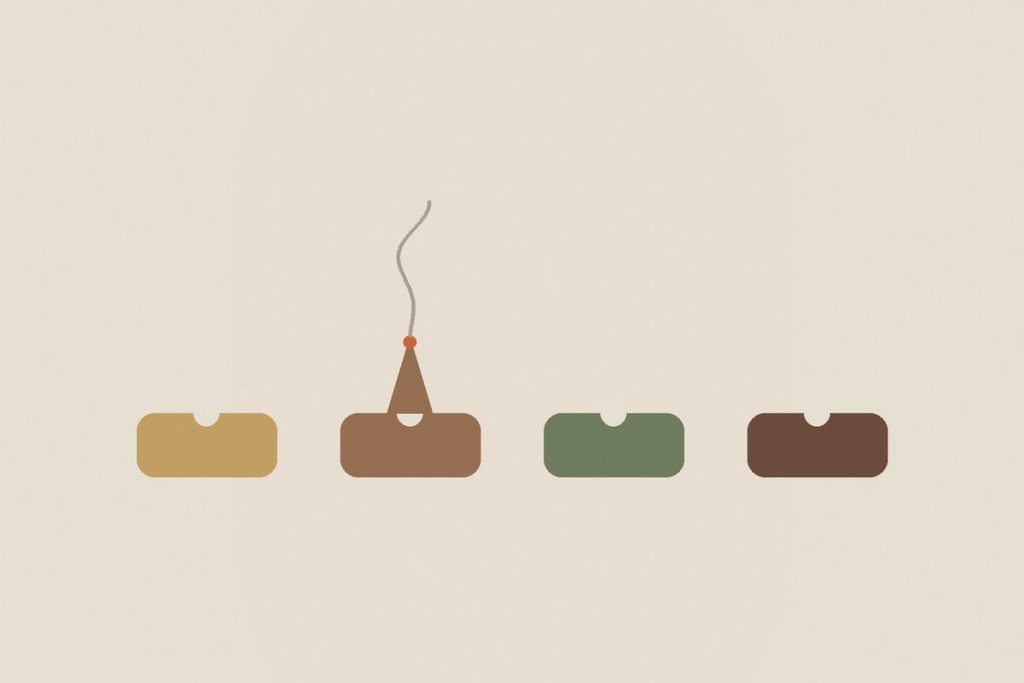
The colours of the five elements are a familiar chart in Vietnamese and wider East Asian folk tradition: each of the five elements has its colours: Metal is white and grey, Wood is green, Water is blue and black, Fire is red and orange, Earth is yellow and brown. You can borrow this chart to choose a glazed holder for fun, but it is a cultural reference, not a rule and not a promise of good fortune.
What are the colours of the five elements?
When we checked, most Vietnamese feng shui sources agreed on a broad frame, though details differ:
- Metal: white and grey (some add silver or metallic tones).
- Woody: green, sometimes dark brown.
- Water: blue and black.
- Fire: red, orange, pink-purple, deep yellow.
- Earth: pale yellow, sand, light brown.
You will spot overlaps: brown can sit with Wood or Earth, yellow with Fire or Earth, depending on the author. That is not you misreading; it is the nature of a living interpretive tradition. Treat the chart as a palette of suggestions.
The element system itself comes from classical Chinese philosophy (see the overview on Britannica); the colour assignments are a later folk layer. See also our piece on the five elements and scent families.
There are two common uses: choosing colours that suit a person’s own element, or colours that balance a room. Each has many versions, and we cannot tell you which is correct.
Why is a glaze never quite the same twice?
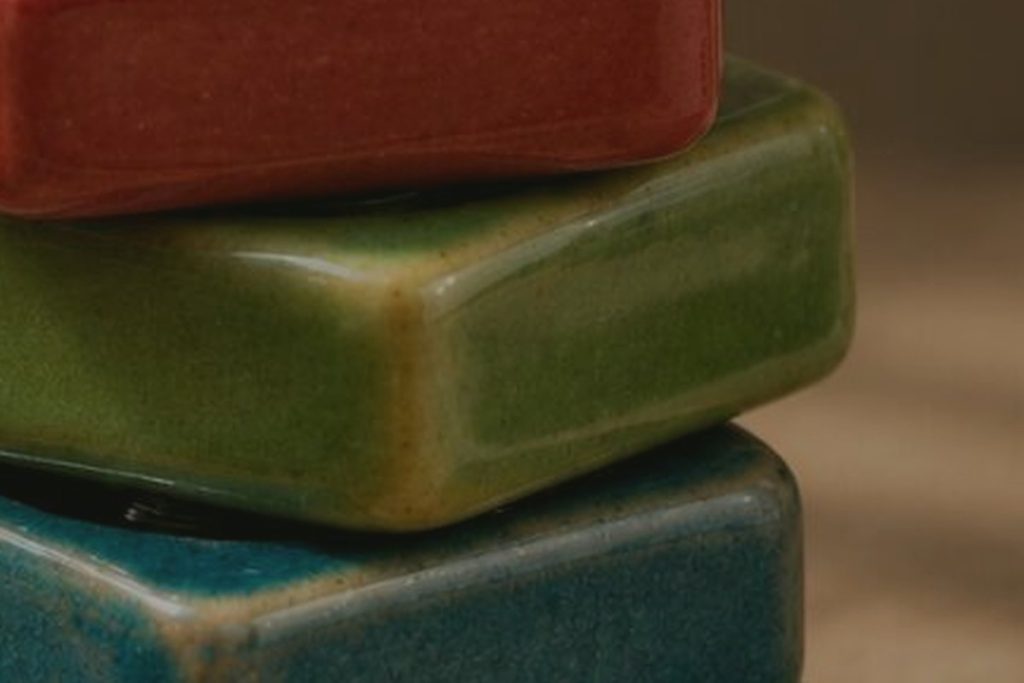
Handmade ceramics have a pleasant quirk: glaze colour shifts with thickness, firing temperature and where the piece sat in the kiln. Two holders from one batch can differ slightly in depth. If you love the spirit of wabi-sabi, this is exactly the beauty of imperfection.
It also means our “green” may lean jade, moss or grey. When matching the colours of the five elements, let your eye decide: if it looks like moss after rain, it carries a Wood feeling even if the label says grey-green.
Which holder colour pairs with which scent?
You do not have to pair at all, but if you enjoy the game, here are ideas for one small corner:
- White or grey holder (Metal): light woody scents, a reading nook, a minimal room.
- Green holder (Wood): herbal scents, near a window or a shelf with plants.
- Blue or black holder (Water): quiet evenings, resinous or warm woody scents.
- Red or orange holder (Fire): sweet scents, the dining table, a welcoming corner.
- Yellow or brown holder (Earth): resinous scents, wooden shelves, a warm living room.
These pairings come from feeling, not from any old text. To see the glazes currently available, visit the shop.
What if your taste disagrees with the colours of the five elements?
Some people love red and are told by some chart that it “does not suit” them. We think you should choose the colour you want to look at every day. A holder you like, set somewhere safe, makes lighting incense an easy habit, and that matters more than any table. See also styling a shelf with ceramic holders.
A practical tip: choose by placement. On a dark wooden shelf a light holder stands out; on a white desk a deep colour adds contrast.
Do not forget safety
Whatever the colour, set the holder on a stable surface away from curtains and paper, and never leave it burning unattended. Open a window so smoke thins out, especially in a small room. Once cool, wipe with a soft cloth to keep the glaze bright.
One small tip: set two or three holders side by side in neighbouring colours, such as white, grey and sand yellow. The set looks harmonious yet still has rhythm. If you enjoy matching the colours of the five elements, start with the colour you find most comfortable and add gradually.
FAQ
Do I have to follow the colours of the five elements?
No. It is cultural reference. Choose a colour you enjoy seeing daily and set it somewhere safe.
Why do sources assign colours differently?
The tradition is interpreted differently by region and school, so brown or yellow can sit under two elements.
Are handmade holders uniform in colour?
Usually not. Glaze thickness and kiln temperature give each piece its own shade, which is part of the charm.
The best holder is the one you want to see each morning, whatever the chart says.