Mugwort is a familiar herb in many Vietnamese homes, from omelettes with the leaves to sprigs hung by the door. Across East Asian cultures it is also tied to burning, steaming and the folk belief of warding off bad luck. This article treats mugwort as a cultural material and a scent, and makes no promise of healing.
What mugwort is
In Vietnam, ngải cứu is usually Artemisia vulgaris (common mugwort), a member of the daisy family, Asteraceae. In China and Japan, the species most often named in traditional sources is Artemisia argyi (the Chinese character is 艾). The two are close relatives, both with leaves that are soft and white-furred underneath and a strong, slightly bitter, green, pungent smell.
The plant grows easily along roadsides, field edges and garden corners, so it became a “home-grown” herb long ago. The Vietnamese name evokes its traditional East Asian use, where dried leaves are processed into soft floss known as moxa wool. Another custom of clearing a space is scenting a new home before you move in.
To be clear, this article is not about medical uses. For people allergic to Asteraceae pollen, mugwort can cause discomfort, so take care with exposure, especially to smoke.
Moxa in East Asian tradition
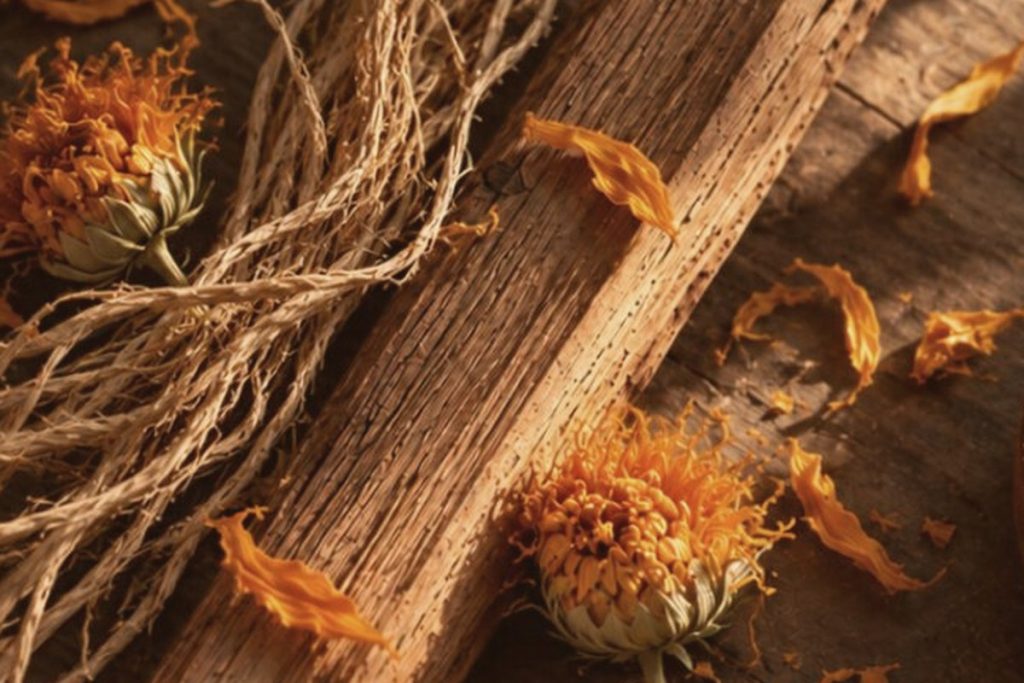
In China, Japan, Korea and Vietnam, dried mugwort leaves have long been prepared as moxa floss to be burned in a traditional practice called moxibustion. It belongs to traditional East Asian medicine, and its effectiveness is still debated among researchers. For that reason we neither recommend it nor comment on any therapeutic value.
What can be said in cultural terms is that the smoke is highly characteristic: pungent, slightly sharp, green, with a note of dried grass. Many people remember it as the smell of a grandmother’s house, of a traditional clinic, of an earlier time. It is hard to confuse with any other scent.
If the smell bothers you, gives you a headache or makes you cough, that is a natural reaction. There is no reason to push yourself to get used to it.
Mugwort in folk custom
In Vietnamese folk culture, mugwort often appears at Tết Đoan Ngọ (the fifth day of the fifth lunar month), as the weather turns hot. According to tradition, many families pick mugwort and other fragrant leaves and hang them at the door or place them in the house, believing, as a folk idea, that this keeps away misfortune and insects. A custom of hanging mugwort and calamus at the door also exists in China around the corresponding festival. Whether you burn or steam, read ventilation basics for burning incense.
There is also the custom of “xông”: simmering fragrant leaves in a pot to release scented steam, to “steam” the house at the start of the year or sometimes oneself. Mugwort is often among those leaves, alongside lemongrass, pomelo peel and lime leaves. It is a custom tied to feelings of cleanness and fresh beginnings, not a medical promise.
Such customs endure in many families because of their emotional meaning: marking the seasons, remembering earlier generations, and giving the household a feeling of shelter.
Xông and smudging: not the same thing
Today we often hear the word “smudging”, commonly used for burning bundled herbs such as sage to “cleanse” a space. It is a practice associated with certain Indigenous communities in North America, where it carries deep spiritual meaning. Using the word casually, or treating it as a decorating trend, can be disrespectful.
The East Asian tradition of burning and steaming mugwort is a different story, with its own history, language and meanings. When talking about mugwort, we should name things according to their own culture rather than lumping everything under a single label.
Mugwort and herbal incense today
In modern herbal incense, mugwort usually plays a minor role, if any, because its scent is very distinct and not everyone likes it. At Yūgen we choose softer notes such as wood, cinnamon, star anise and pomelo peel for the Herbal and Woody groups. If you enjoy the green, grassy smoke of mugwort, try simmering a pot of fragrant leaves in the kitchen instead of burning it, so the scent is lighter and easier to control. A different herbal root in incense is vetiver, the village grass root.
However you use it, keep the room ventilated, since any smoke can irritate the airways. People with respiratory conditions or allergies, who are pregnant or who have small children at home should ask a doctor before burning herbs regularly.
You can browse the scent groups or try the Scent Finder to find a scent that suits you.
FAQ
What does mugwort mean in smudging culture?
It is a folk custom across several East Asian cultures; this article looks at it culturally and makes no healing claims.
Are xông and smudging the same?
Not exactly. They come from different traditions with different meanings.
What should I keep in mind when burning mugwort?
Burn in a ventilated space, in moderation, and never leave a flame unattended.
A custom lives on not for its promises, but because it reminds us to care for home.