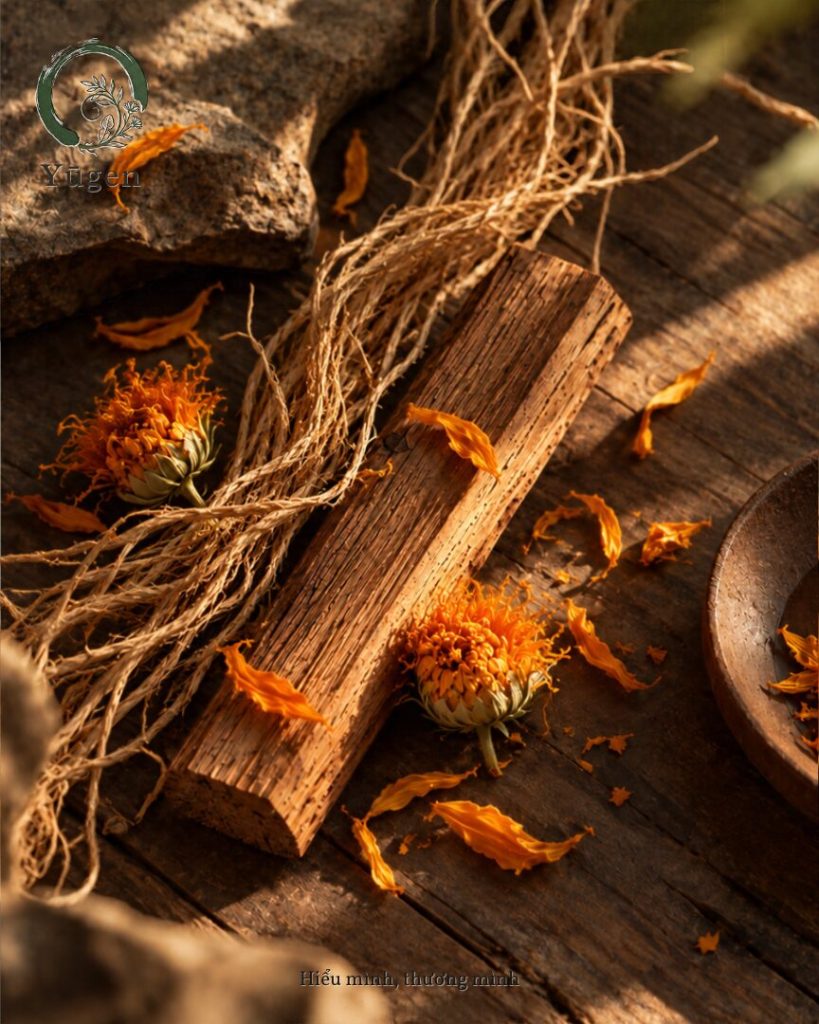
Vietnamese herbal incense cones are typically blended from familiar ingredients: mugwort, cinnamon, agarwood, soap pod (bồ kết), lemongrass, star anise, pomelo peel, and litsea bark powder as a natural binder. Each adds its own character: mugwort a bitter-green countryside note, cinnamon warmth, agarwood depth, and soap pod a clean scent many Vietnamese associate with childhood hair-washing. This guide looks at each ingredient for its scent and cultural meaning, not for any medical effect.
Why Vietnamese incense uses herbs
Vietnamese households have long burned fragrant leaves, bark and wood at home: soap pods at Lunar New Year, mugwort on damp days, agarwood on the family altar. These scents are tied to family memory and daily life. Modern herbal cones keep that spirit, simply ground fine, blended in proportion and shaped into cones for everyday use.
Common herbs in incense cones
Mugwort
Mugwort smells sharp, slightly bitter and very “countryside”. Dried leaves burn with a woody smoke and a light green note. In many Asian cultures mugwort is burned at festivals or to refresh a room after the rainy season. In blends it often acts as a base note that keeps the scent from turning too sweet. Read more on mugwort in smudging culture.
Cinnamon
Vietnamese cassia bark, especially from Yên Bái and Quảng Nam, is known for its warm, sweet-spicy scent. In incense it brings a cosy feeling, like a kitchen in winter. It is the heart of our Cinnamon Wood sticks.
Agarwood
Agarwood is resin-rich heartwood from the aquilaria tree, prized because it is rare and takes years to form. Its scent is deep, smooth and slightly sweet, often linked with stillness. Because it is precious, it is used in measured amounts and blended with other woods. See how agarwood forms.
Soap pod
Roasted or burned soap pods give a clean, faintly sweet-smoky scent. For many Vietnamese it is the smell of New Year’s Eve, when grandmothers and mothers burned them to freshen the home. In cones it adds a uniquely nostalgic layer.
Lemongrass
Lemongrass brings a fresh, citrusy brightness. It is used sparingly, as a top note that keeps the blend from feeling heavy.
Star anise
Star anise has a distinctive sweet-spicy scent. A little adds warmth and roundness and pairs beautifully with cinnamon.
Pomelo and orange peel
Dried pomelo peel gives a cool, slightly bitter freshness. A humble ingredient that makes a blend feel clear and pleasant.
Litsea bark powder (binder)
Litsea bark powder turns sticky when mixed with water, binding the herbal powders without chemical glue. It is a traditional material in many Vietnamese incense-making villages. More in natural binders: bời lời and makkō.
How the herbs are blended
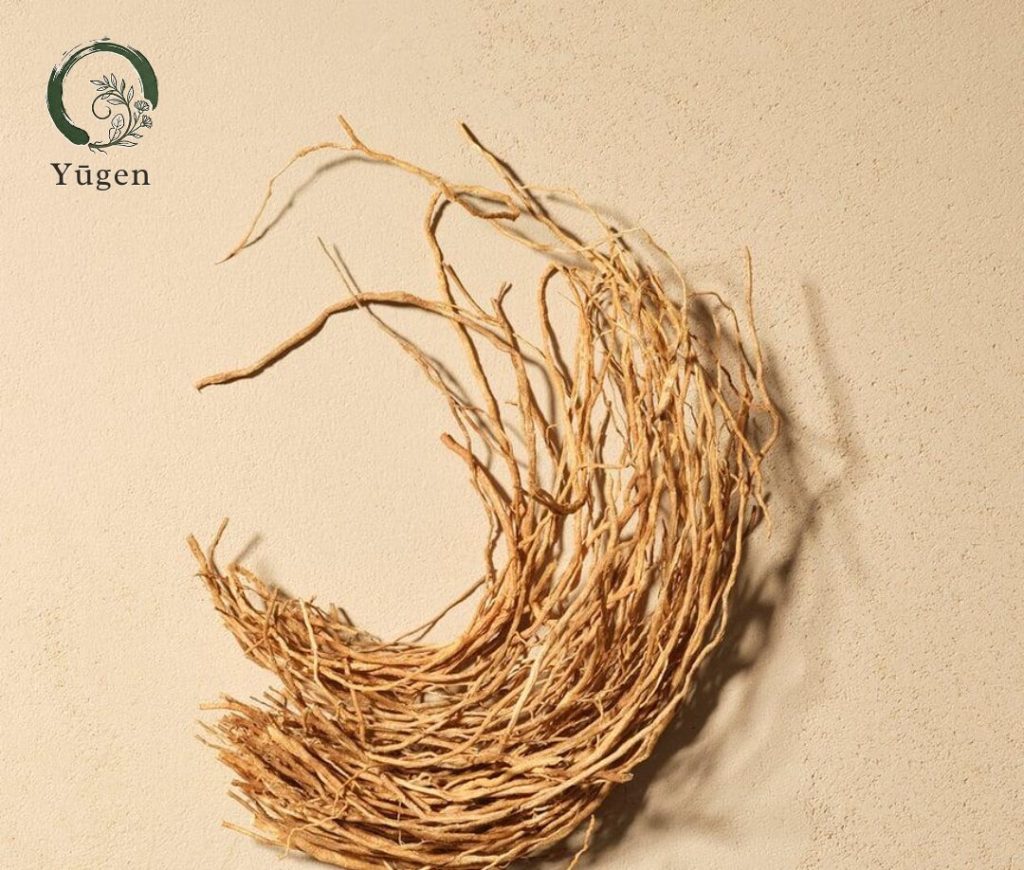
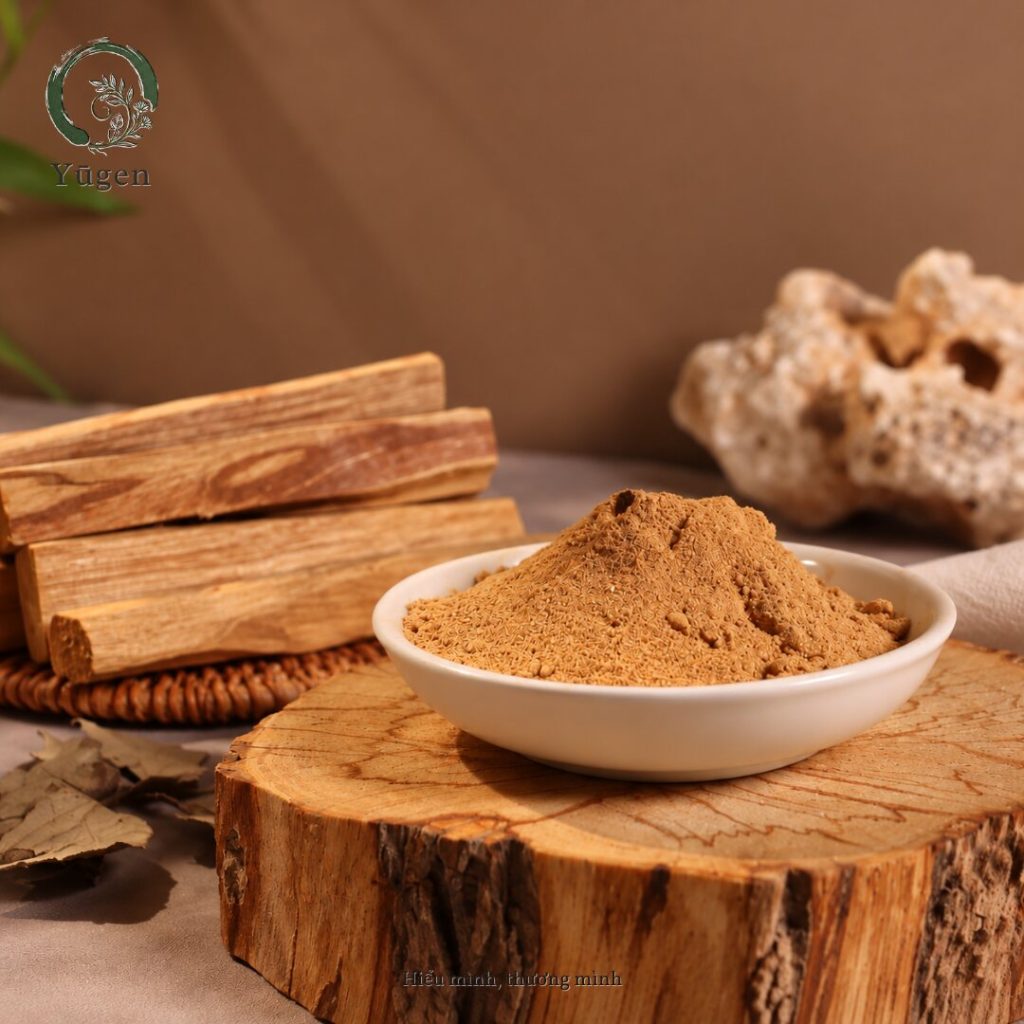
A cone usually has three layers: a base (wood, agarwood, mugwort) for depth and longevity; a heart (cinnamon, star anise, soap pod) for character; and a top (lemongrass, pomelo peel) for the first impression as smoke rises. The balance decides whether a scent feels warm, clear or deep. Kei cones, for example, build on Australian sandalwood and vetiver root, with blue lotus for a light, clear touch.
A few notes on use
- Natural herbs still produce smoke. Burn in a ventilated space and don’t burn too many at once.
- If you are allergic to a particular plant, read the ingredients carefully first.
- Scent supports a calm space; it does not replace medicine or medical advice.
- Store cones in a dry, sealed container so the herbs keep their scent longer.
FAQ
Do herbal cones contain essential oils?
It depends on the recipe. The main scent comes from the herbal powders; some products add small amounts of natural essential oil. Check the ingredient list.
Why does each batch smell slightly different?
Natural ingredients vary with season, moisture and growing region. That small variation is a sign of real herbs.
Which scent should I start with?
If unsure, compare with the 5-scent sampler. For a gift, the Yūgen gift set is a complete choice.
Explore the full range in the Yūgen shop.