
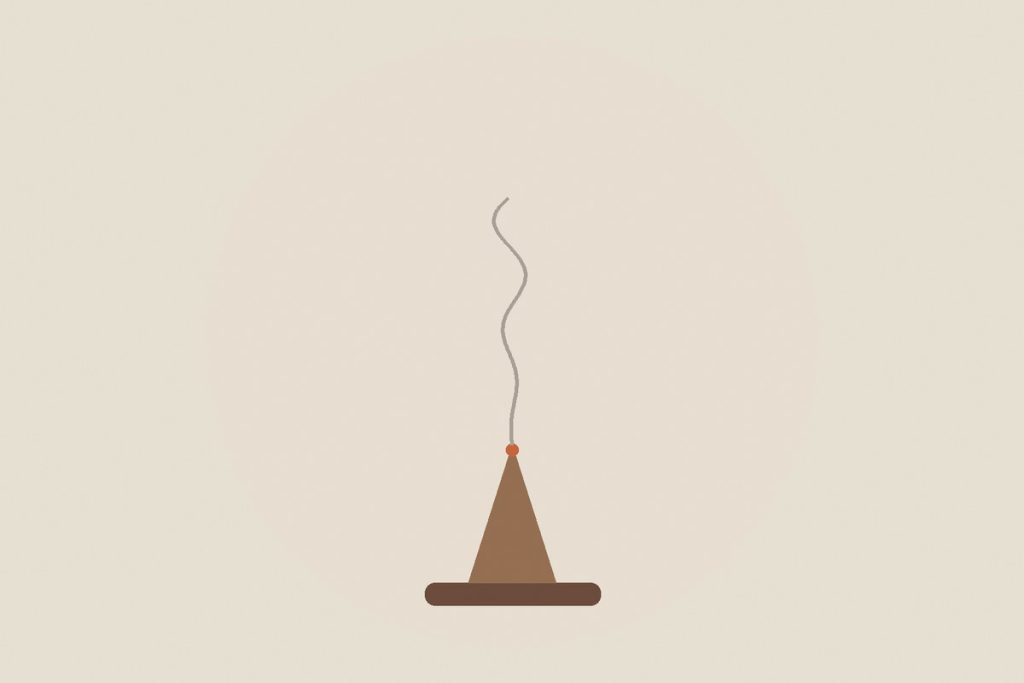
Incense smoke moves by the simple rules of air: warm air is lighter and rises, then bends sideways at a ceiling or draft and blends into the room. You do not need physics to enjoy incense, but a few basics help you choose a spot where scent spreads evenly, smoke does not collect in one corner and it does not make you cough. Here is how to watch smoke like a curious observer.
Why does incense smoke move upward in a thin thread?
At the tip of a burning cone, air heats up and becomes lighter than its surroundings, so it rises and carries smoke particles with it. In still air you see a slim, smooth, straight thread. This gentle flow is what scientists call laminar. For a general description see this entry on plumes in fluid dynamics.
Once incense smoke moves some tens of centimetres higher, the thread usually starts to wobble, swirl and thin out. That is when the flow turns turbulent, and why the pretty curves never last long.
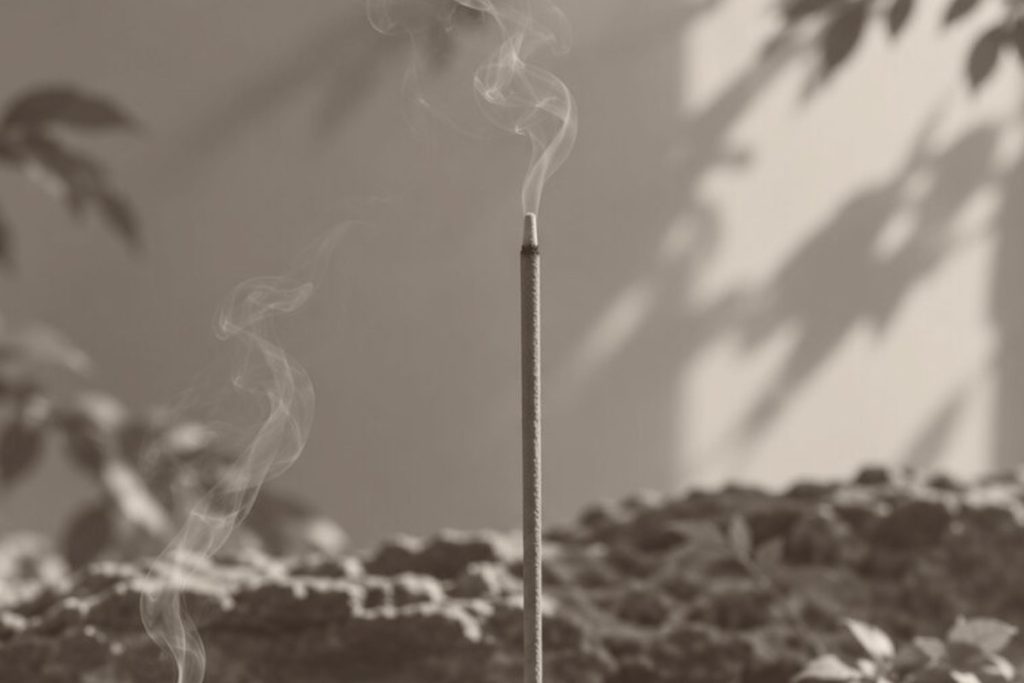
How do drafts change the way incense smoke moves?
A very light breath of air from a fan, window, air conditioner or someone walking past is enough to bend the thread. Often we cannot feel the draft, but the smoke tells us: it is a beautiful airflow probe. If smoke always leans one way, look for which opening is pulling or pushing air.
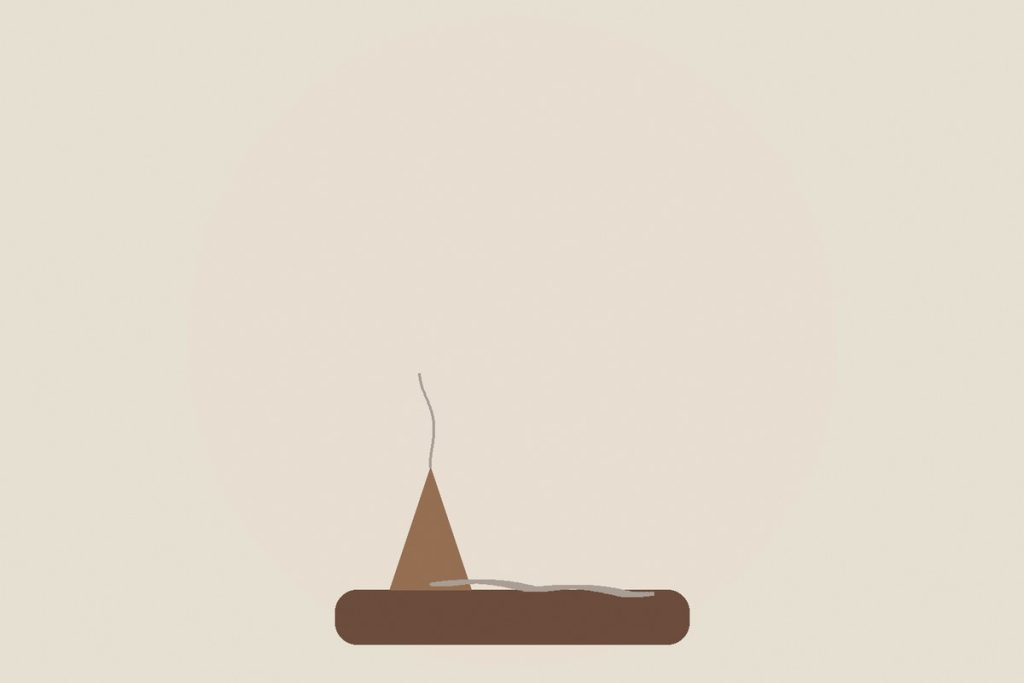
Watching how incense smoke moves is also why backflow cones are hard to keep in shape in a breeze. The falling smoke is cooler and heavier than the air around it, so it flows down slowly and the slightest draft scatters it. If you like photographing it, photographing backflow smoke has more on keeping air still.
How does incense smoke spread in a small room versus a large one?
In a small, closed room, smoke and scent fill the space quickly, so a little goes a long way. In a large room scent thins out, and you may place it closer to where you sit. A high ceiling gives smoke more room to rise and dissipate, while a low one keeps it nearer to you.
In a small flat, dose and airflow matter most; incense in a small apartment goes deeper.
Where should you place incense so smoke spreads well?
A few simple suggestions to adapt to your room:
- Choose a spot with gentle airflow, a few steps from a window, so smoke has a way out.
- Avoid placing it right under a ceiling fan, air conditioner or strong draft: smoke gets pushed into your face or a corner.
- Keep it below nose height, about an arm’s length away, so smoke disperses before it reaches you.
- Keep clear of curtains, bookshelves and paper; see fire safety with incense.
- Avoid the bedside and never burn while sleeping.
A small tip: if you open windows, crack two opposite sides so air passes through; with only one window, a slit is still better than none. Ventilation basics for incense covers this.
Is it safe for smoke to drift through the room?
However incense smoke moves, smoke from anything burning contains tiny particles, so what you control is moderation and open windows. If you are prone to airway discomfort, burn less or not at all, and ask a doctor. One practical note: a lot of smoke can set off a home smoke alarm, so keep incense well away from detectors.
To choose a scent, use the Scent Finder or browse the shop. One cone is enough for a slow sit.
FAQ
Why does smoke go straight, then twist?
Near the tip the flow is smooth, so the thread is straight. Higher up it turns turbulent and swirls as it meets small currents and thins out.
Does a ceiling fan spread scent better?
A fan spreads scent faster but also pushes smoke around and makes the cone burn unevenly. If you use one, keep it gentle and set incense away from the airflow.
Does falling backflow smoke mean it is heavier than air?
It flows down slowly because it is cooler and denser than nearby air, but only in very still air. A draft will break it up.
Incense smoke is the air drawing itself with one thin line.