Thousands of years ago, fragrant resins, woods and spices travelled long distances, on camels across deserts and on sailing ships across seas, to reach people who needed them for ritual, traditional medicine and daily life. The ancient incense routes had two famous axes: the frankincense route running north from the Arabian Peninsula, and the sea routes linking the Indian Ocean to East Asia, where Southeast Asian agarwood, including from the old Champa lands, holds a memorable place.
Why was incense once so precious?
Picture a merchant centuries ago holding a small sack of resin that has already travelled for months. Each lump is the result of a harvest season, difficult roads and trust between many people.
In the ancient world, a pleasant scent was never only about comfort. Incense belonged to temples, funerals, royal courts and the idea of purifying a space. The raw materials grew in narrow places: frankincense (Boswellia) and myrrh (Commiphora) mostly in southern Arabia and East Africa, agarwood (Aquilaria) in the tropical forests of Southeast Asia. Scarce where produced and wanted far away, incense became a profitable good for merchants.
That distance created trade routes, rest stops and port cities that grew rich on incense and spice.
The Arabian frankincense route
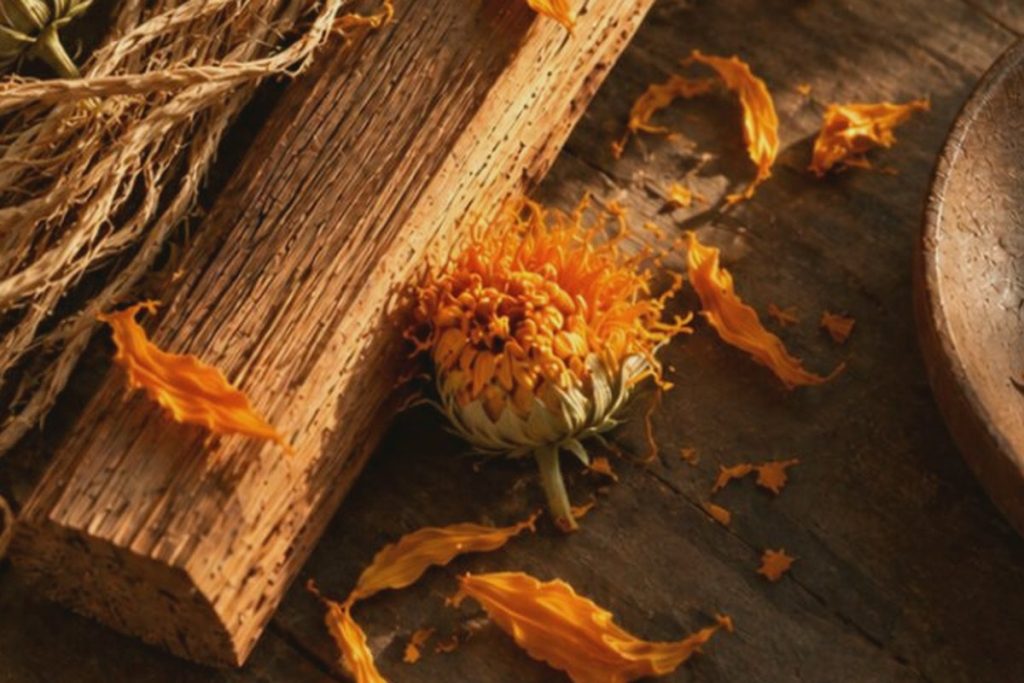
Frankincense is the dried resin of the Boswellia tree, collected by lightly cutting the trunk. The Dhofar region of southern Oman has long been known for it, and UNESCO inscribed the “Land of Frankincense” in Oman as a World Heritage Site in 2000, including frankincense tree valleys and ancient port ruins such as Khor Rori. From there, caravans carried resin north along the west of the Arabian Peninsula toward the Mediterranean.
Along that route also lie the Nabataean desert cities of the Negev, which UNESCO recognised in 2005 as “Incense Route – Desert Cities in the Negev.” They testify to how long-distance trade was organised, from wells and caravan stops to watchtowers.
The maritime silk road
Not every cargo was incense, but incense was among the most valued small goods: light to carry, high in value and easy to pack among larger cargo.
Alongside the land routes ran sea lanes, often called the “Maritime Silk Road,” linking East Africa, Arabia, India, Southeast Asia and China. Ships followed the monsoons: winds carried them one way in one season and back in another. On board were ceramics, silk, metals and, of course, aromatics such as sandalwood, agarwood, camphor, pepper and cloves.
It was also how habits of using incense travelled. Incense moved with religion, court culture and traditional medicine, and each place turned it into its own practice: from temple ritual to the refined appreciation of scholars. Sandalwood, another cargo often named beside agarwood on these ships, has its own post: sandalwood.

Champa and agarwood
Traders did not only exchange goods; they carried stories, names and ways of use. Words such as trầm, kỳ nam and sandalwood probably spread this way, through many languages and generations of merchants.
On the central coast of present-day Vietnam, once the kingdom of Champa, merchants found forests that produced agarwood. According to some historical sources and research, Champa was known as a supplier of agarwood and other prized forest goods to Chinese, Arab and other traders, through ports such as the Hội An area and Nha Trang. Some old Chinese texts describe the agarwood of this region, though the detail varies by source.
Centuries later the memory still lingers: Khánh Hòa is famous for agarwood to this day. Still, records of the aromatics trade are often fragmentary, and confident claims about any single port are best read with care. For the agarwood heritage of that coast today, see Khánh Hòa agarwood.
How the ancient incense routes reach your cone today
Today incense no longer has to follow a camel train across the desert, but an old principle remains: precious materials come from specific places, and harvest must be kept sustainable. For agarwood, trade in Aquilaria species is now regulated under CITES; where possible, favour transparent sources and cultivated wood.
When you light a cone, you may be touching a very long thread of history: wood, resin, roots and leaves picked, dried, ground and passed along in stages. You can browse the scent groups (Woody, Herbal, Agarwood, Soft & sweet) in the Yūgen shop, or read our story to see how we choose ingredients. And when you burn incense at home, remember to open a window. To see why origin matters, read about sustainable agarwood and CITES.
FAQ
What were the ancient incense routes?
They were the overland and sea routes along which fragrant resins, woods and spices travelled thousands of years ago. The best known are the frankincense route north from the Arabian Peninsula and the sea routes linking the Indian Ocean to East Asia.
How is frankincense different from agarwood?
Frankincense is the dried resin of Boswellia trees, mainly from southern Arabia and East Africa. Agarwood is the resin-laden heartwood of Aquilaria trees from tropical Southeast Asia.
Did Champa supply agarwood?
According to some sources and studies, Champa was known as a supplier of agarwood to traders from several countries. The historical record is patchy, though, so confident claims should be read with care.
Each stick carries a long road, from forest, desert and sea, to a small corner of your home.