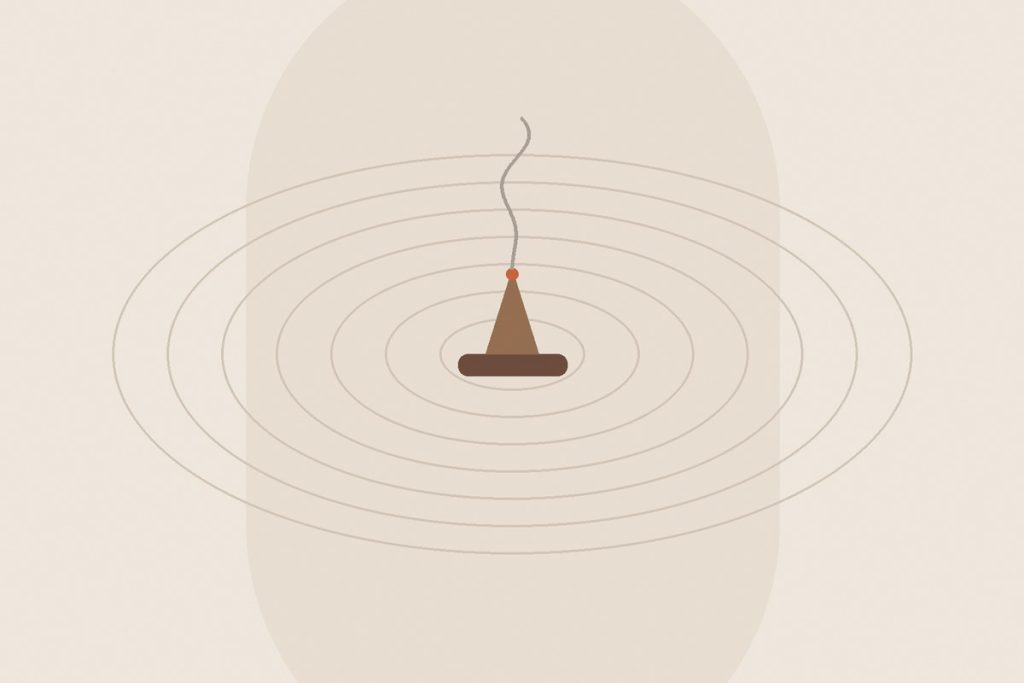
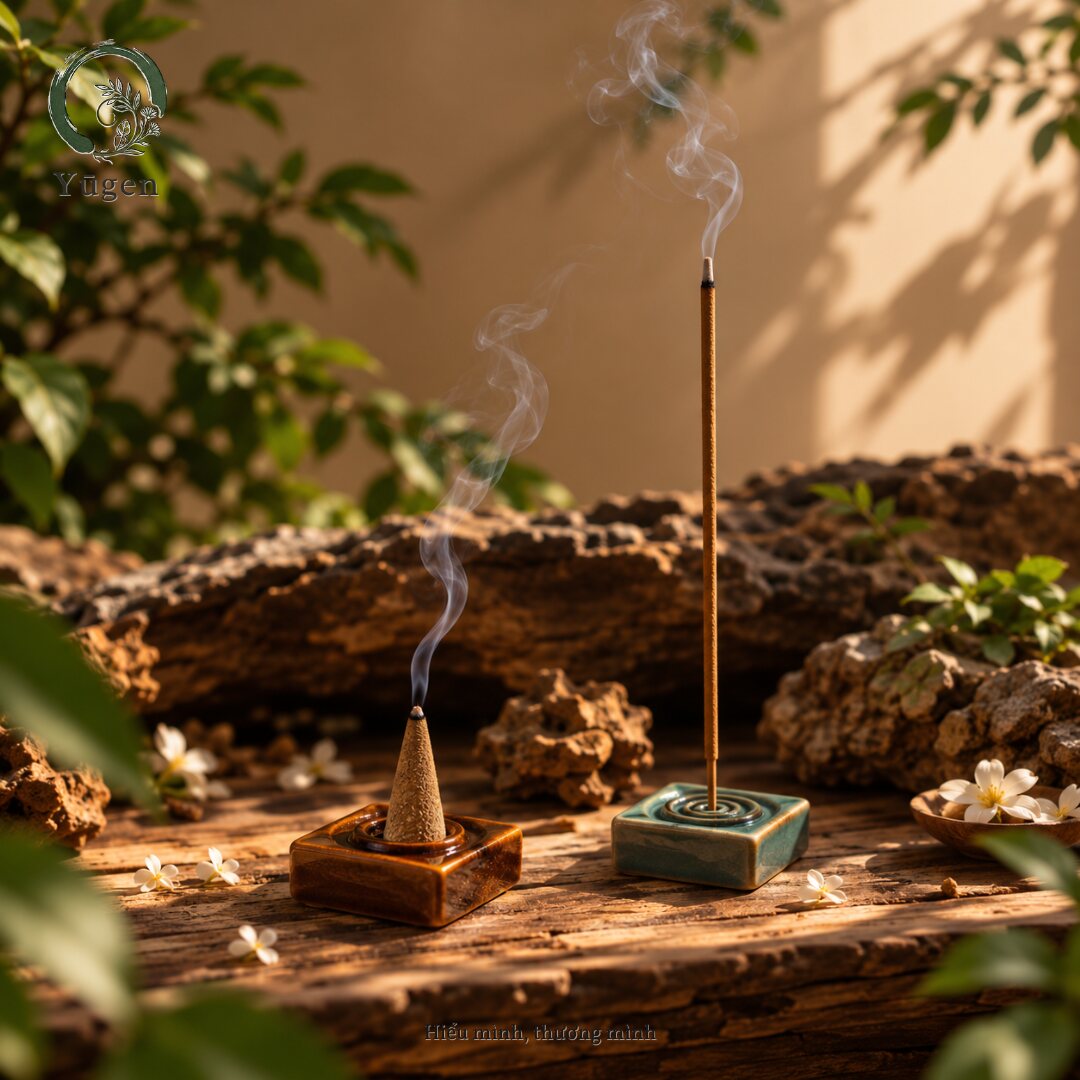
How to Burn Incense Cones Safely, Including Backflow Cones

To burn incense cones safely, remember three things: place the cone on a heat-resistant holder on a flat surface, light the tip and blow out the flame so it smoulders, and never leave a burning cone unattended. Backflow cones need one extra step: make sure the smoke channel is clear and the holder sits somewhere draught-free. Below we walk through each step, plus the common mistakes and how to fix them.

Regular cones vs. backflow cones

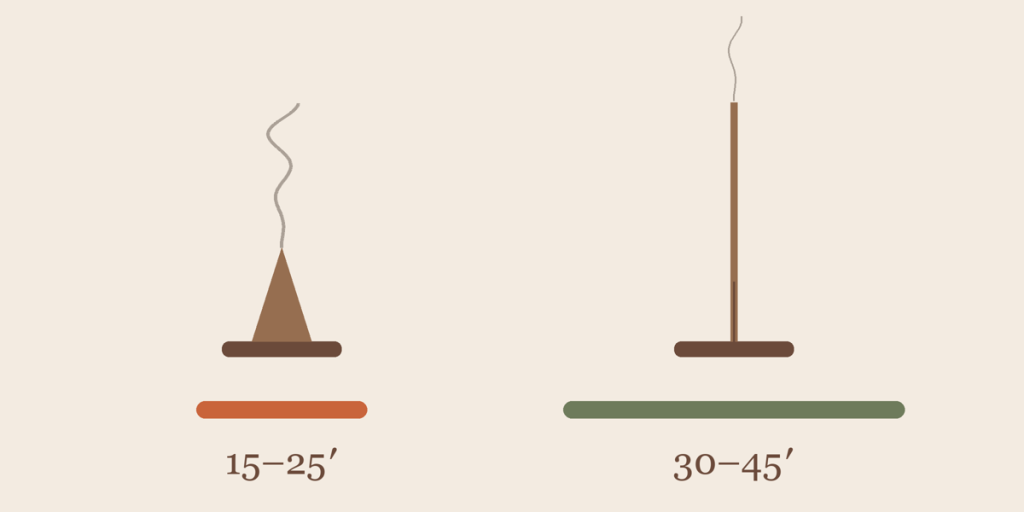
A regular cone is solid. As it burns, smoke rises like a stick of incense, only stronger and over a shorter time, usually 15–25 minutes per cone.

A backflow cone has a hollow channel running from the base almost to the tip. Hot smoke escapes upward, while cooler, heavier smoke is drawn down through the channel and out of the base. On a holder with a groove or waterfall shape, that smoke drifts downward like mist. That is why many people burn backflow cones to watch, not only to smell.
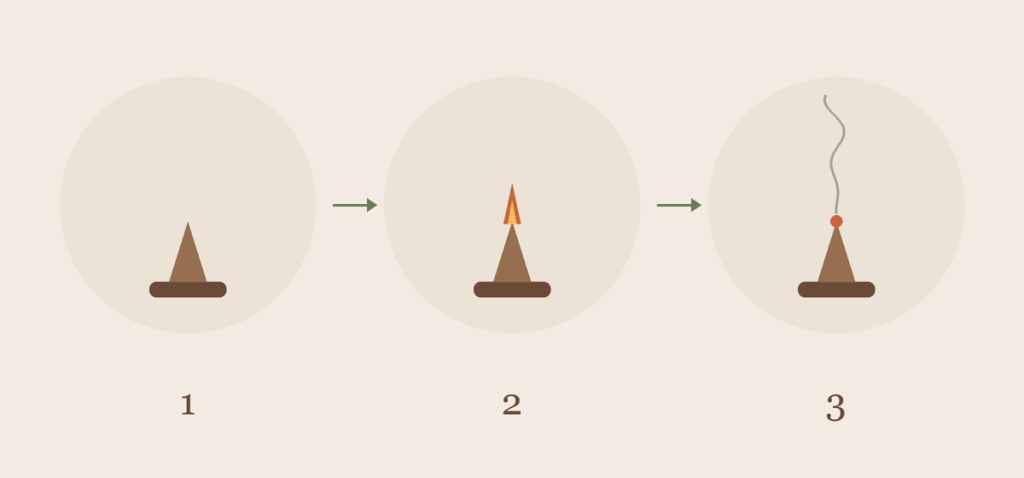
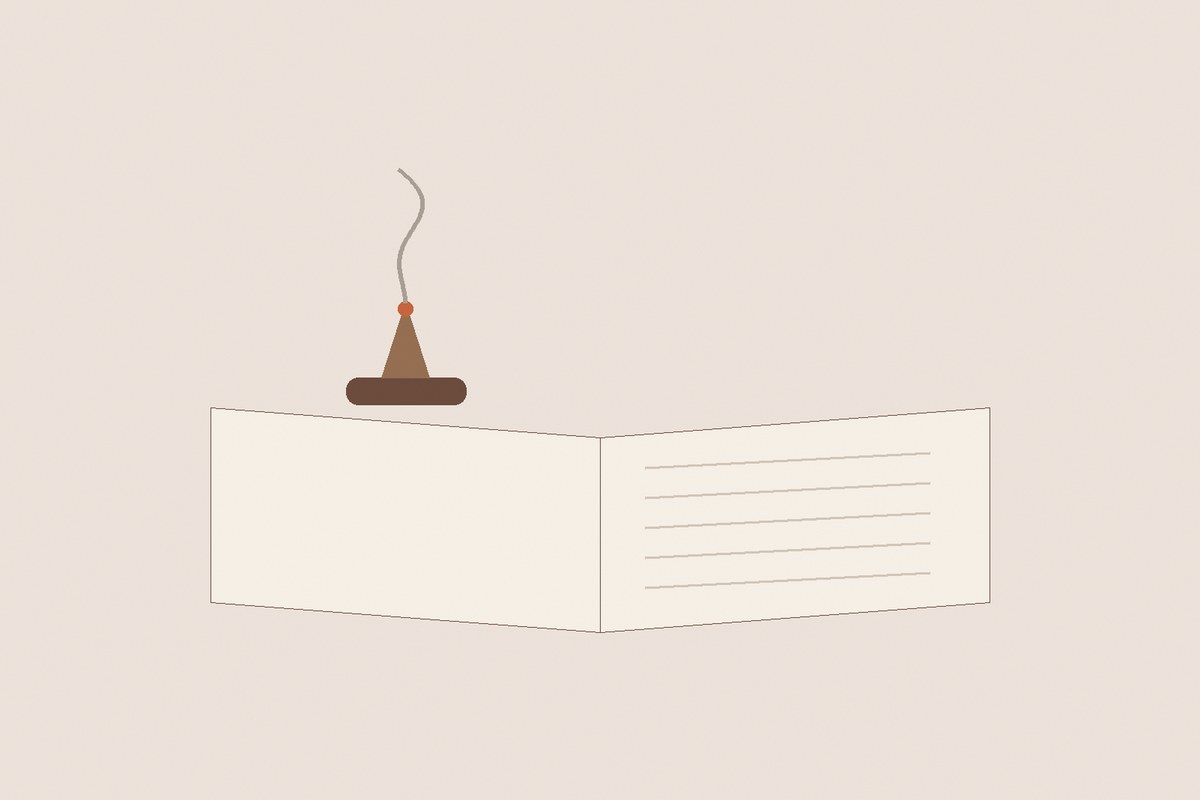
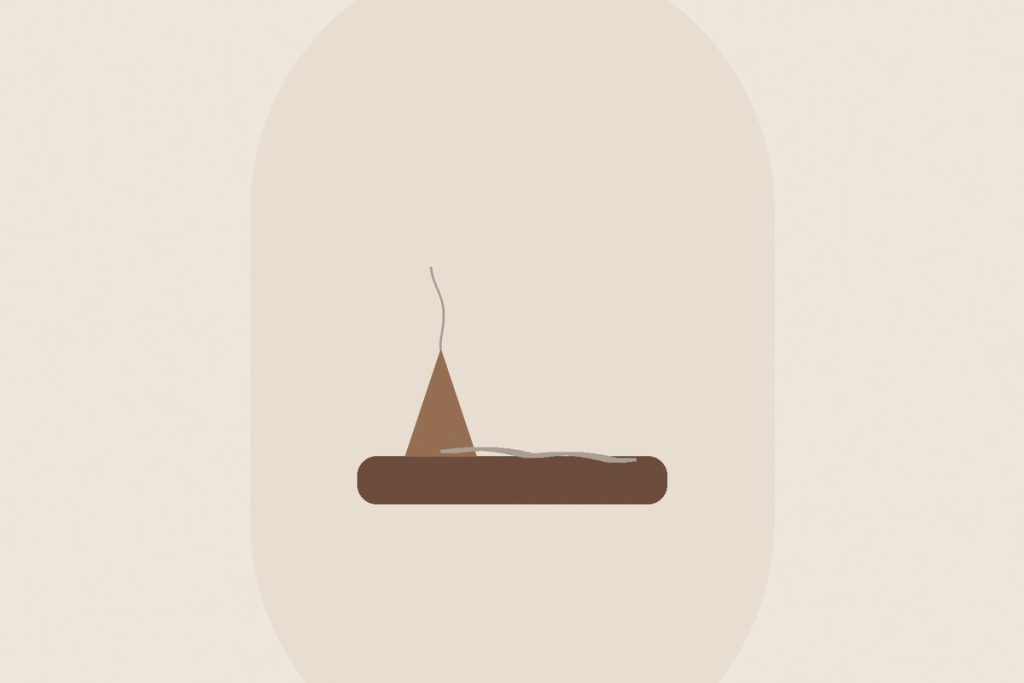
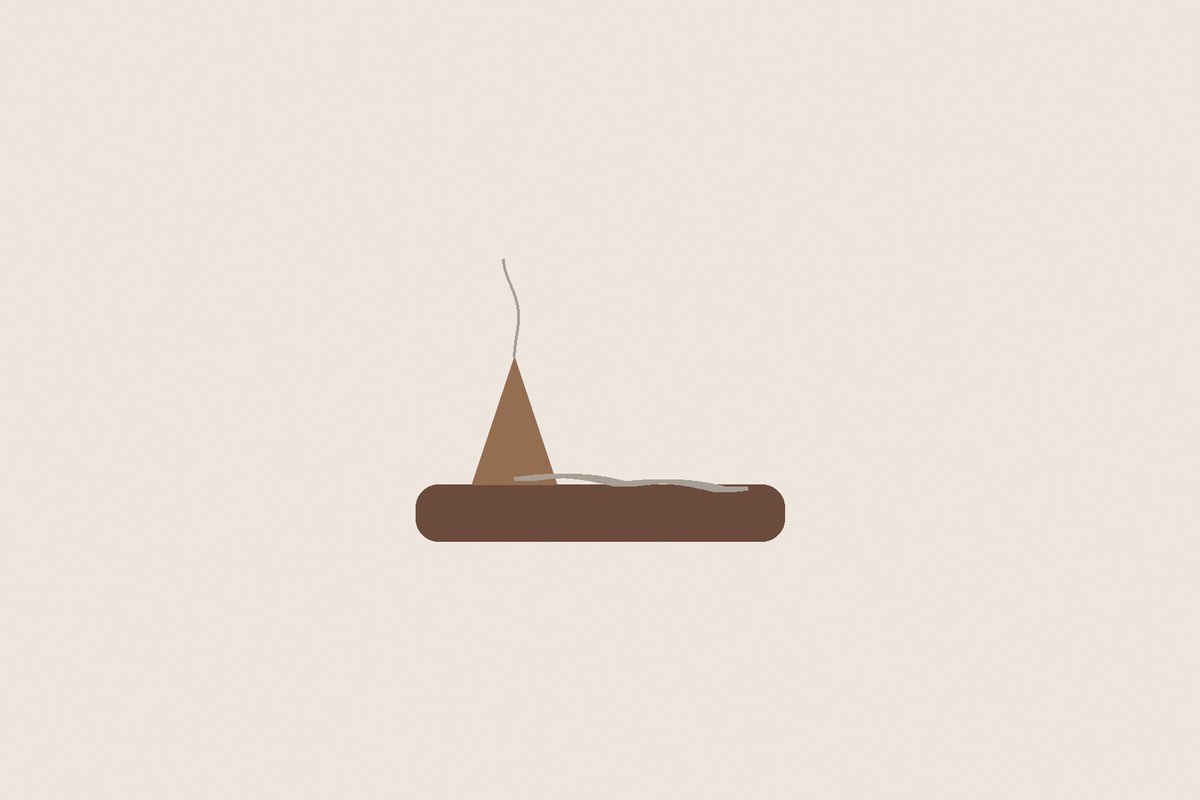
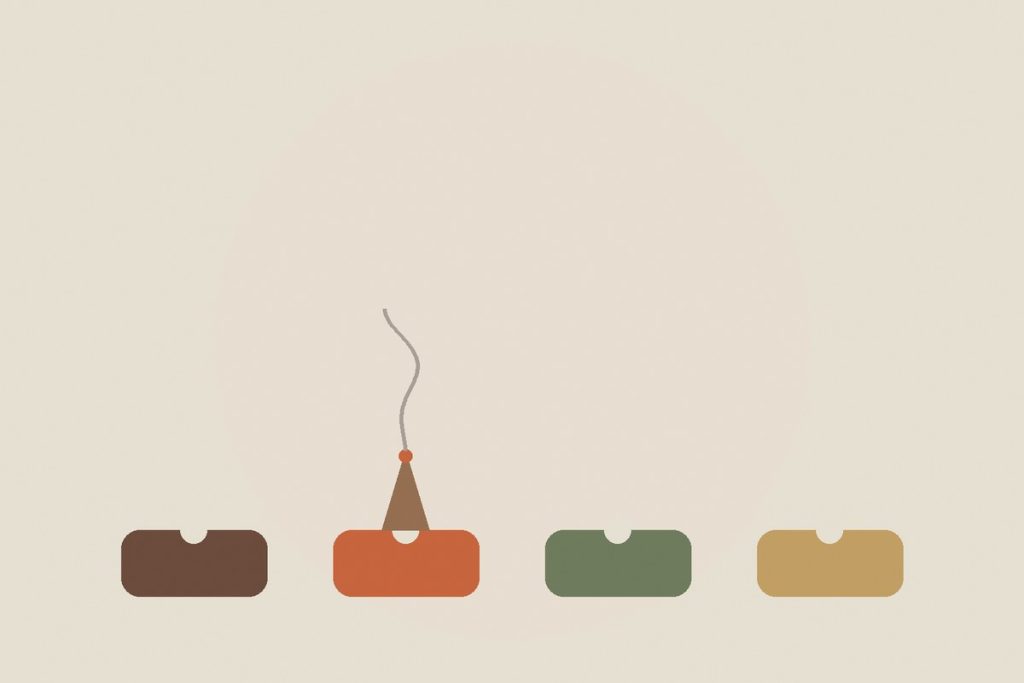
Ba bước đốt nụ hương
Place, light, blow out – once the tip glows, the smoke begins.

Before you light

Choose the right holder

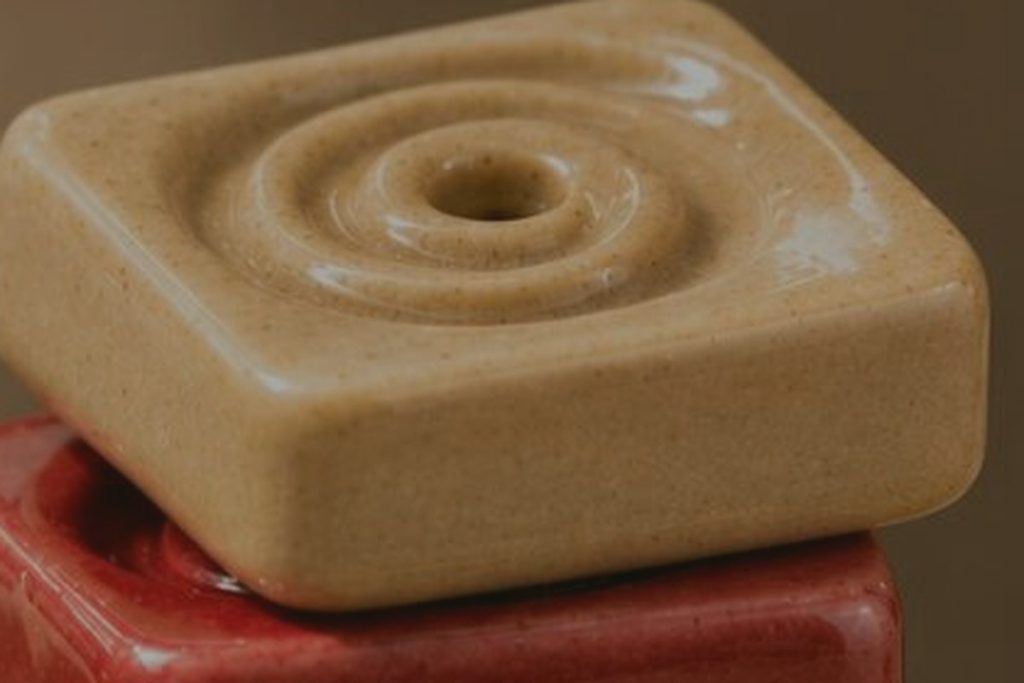
Use a heat-resistant material such as ceramic, stone or metal. Never set a cone directly on wood, plastic or fabric. For backflow cones the holder needs a hole exactly where the cone sits. Our glazed ceramic holder is high-fired and deep enough to catch the ash.

Choose the right spot

  • A flat, stable surface, away from table edges, children and pets.
  • At least 30 cm from curtains, paper, books and anything flammable.
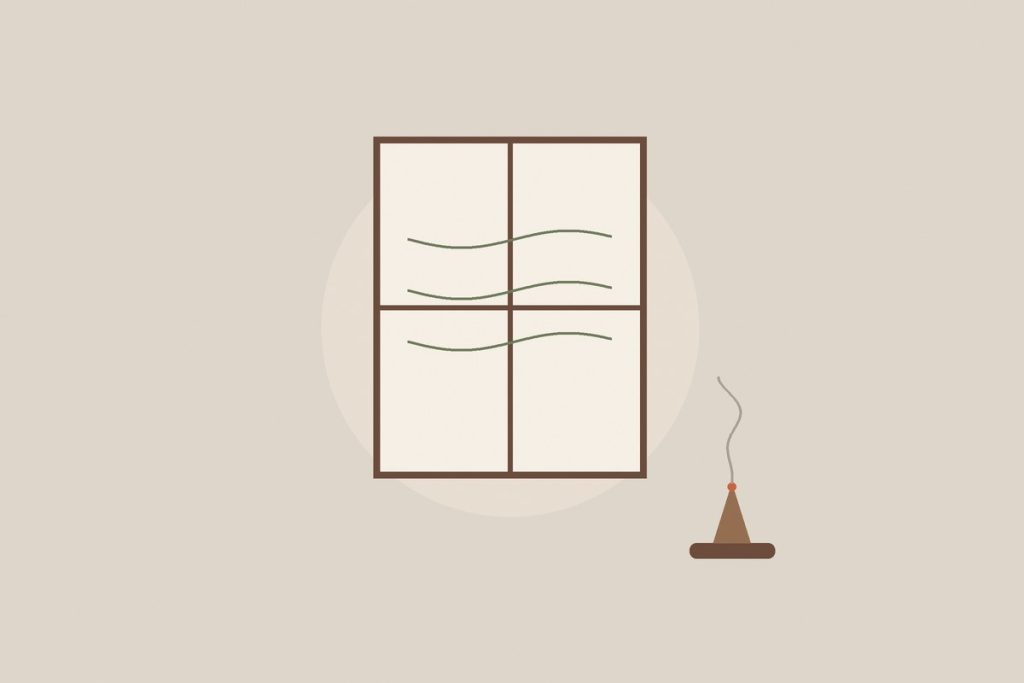
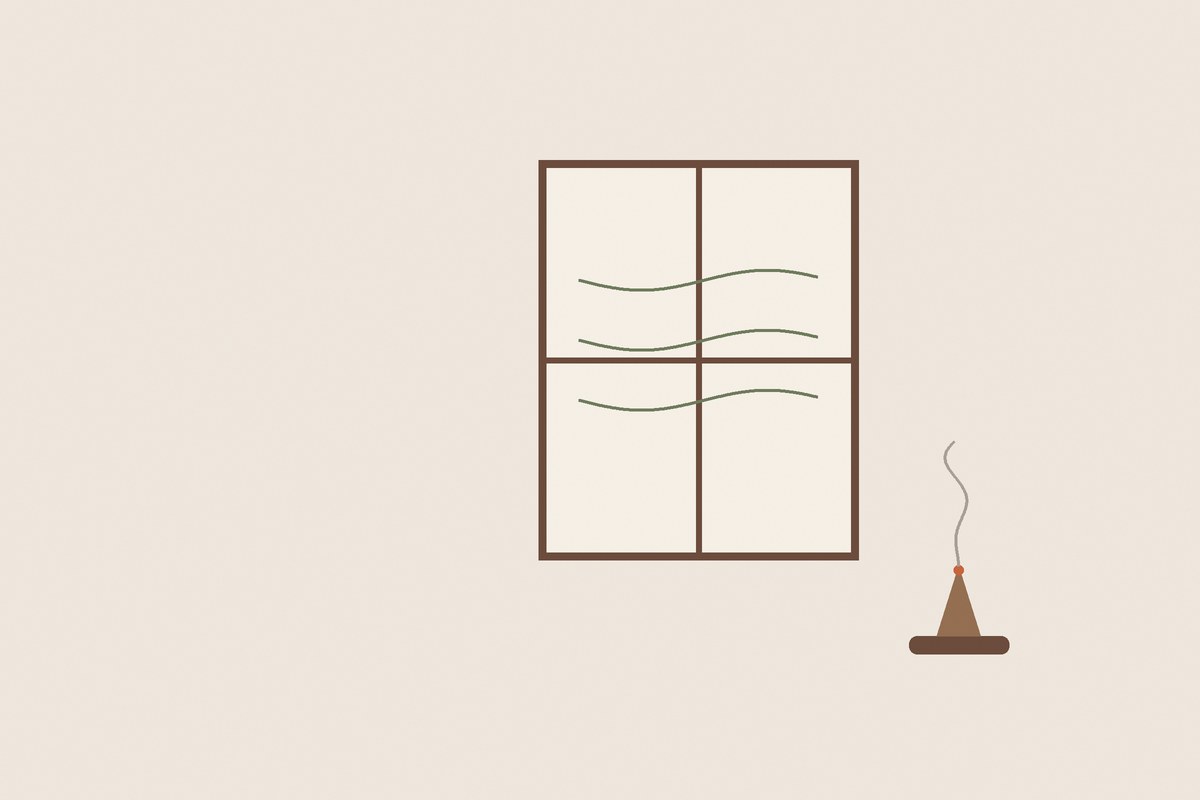
  • Out of the path of fans, air conditioners and open windows. Draughts scatter backflow smoke and make the cone burn unevenly.
  • Light ventilation is good. A slightly open door is enough.

How to burn an incense cone, step by step

Step 1: Hold the cone by its base

Pinch the wide base and tilt the tip toward the flame. A long lighter or match keeps your fingers further from the fire.

Step 2: Light the tip for 10–15 seconds

Keep the flame on the tip until it catches evenly. Herbal cones often take a little longer than cones packed with accelerants, so be patient.

Step 3: Gently blow out the flame

Once the tip glows red, blow softly to put out the flame. The cone should now smoulder with a small red ember and a thread of smoke. If there is no smoke after a few seconds, light it again.

Step 4: Place it on the holder

For a backflow cone, line the base up with the hole in the holder. For a regular cone, simply set it in the centre. For the first 2–3 minutes the smoke mostly rises; the backflow effect usually appears once about a third of the cone has burned.

Step 5: Let it burn out and cool

A cone burns for roughly 15–25 minutes. The ash and holder stay hot for a few minutes afterwards, so wait before emptying or moving it.
Hộp nụ hương Yūgen
Keep cones in a closed box in a dry place so the scent lasts.

Why isn’t my smoke flowing down?

  • Draughts: even a gentle fan breeze breaks up the stream. Try a more sheltered corner.
  • Blocked channel: ash and resin build up on the holder. Wipe the hole clean every few burns. See cleaning ceramic backflow holders.
  • Damp cones: cones that absorb moisture are hard to light and may go out. Store them in a sealed box in a dry place. If a cone still goes out, read why incense cones go out mid-burn.
  • Misaligned cone: a few millimetres off and the smoke has nowhere to go. Re-centre it.
  • A hot room: warm air keeps smoke from cooling and sinking. Evenings and cooler rooms give a prettier flow.

Safety notes

Fragrance is meant to help you relax, so safety comes first. Don’t burn incense while sleeping or when you leave home. Avoid fully sealed rooms and don’t burn several cones at once; one cone is usually enough for a 15–20 m² room. If you are sensitive to smoke, pregnant, or have a newborn at home, keep sessions shorter and the room well aired. See also fire safety with incense.

Ingredients matter too. Cones made from natural herbal powders tend to give softer smoke, a woody scent and fine ash. If you want to find the scent that suits you, the 5-scent sampler is an easy place to start.

FAQ

How long does one cone burn?

Usually 15–25 minutes, depending on its size and how airy the room is.

Can I put a cone out halfway?

Yes. Cover it with a small ceramic cup or press the burning tip into ash with tongs. Avoid water, which can crack a hot ceramic holder.

Can I burn a backflow cone on a regular holder?

It will burn, but without the downward smoke effect, since the smoke has no exit at the base.

How often should I clean the holder?

Every 3–5 burns, or whenever the smoke hole starts to darken and feel sticky.

Browse all our cones, sticks and ceramic holders in the Yūgen shop. Know yourself, be kind to yourself — starting with one cone, burned well.
Herbal vs. Synthetic Incense Cones: 5 Ways to Tell at Home

Herbal incense cones and synthetic ones can look alike, but four clues usually tell them apart: the scent before lighting, the colour and texture of the smoke, how the room smells afterwards, and the colour of the ash. Herbal incense smells woody and soft and fades gradually; heavily fragranced incense tends to be sweet and sharp from the start and can leave a room feeling stuffy. Here is how to check at home and what to look for on the label.

What counts as herbal incense?

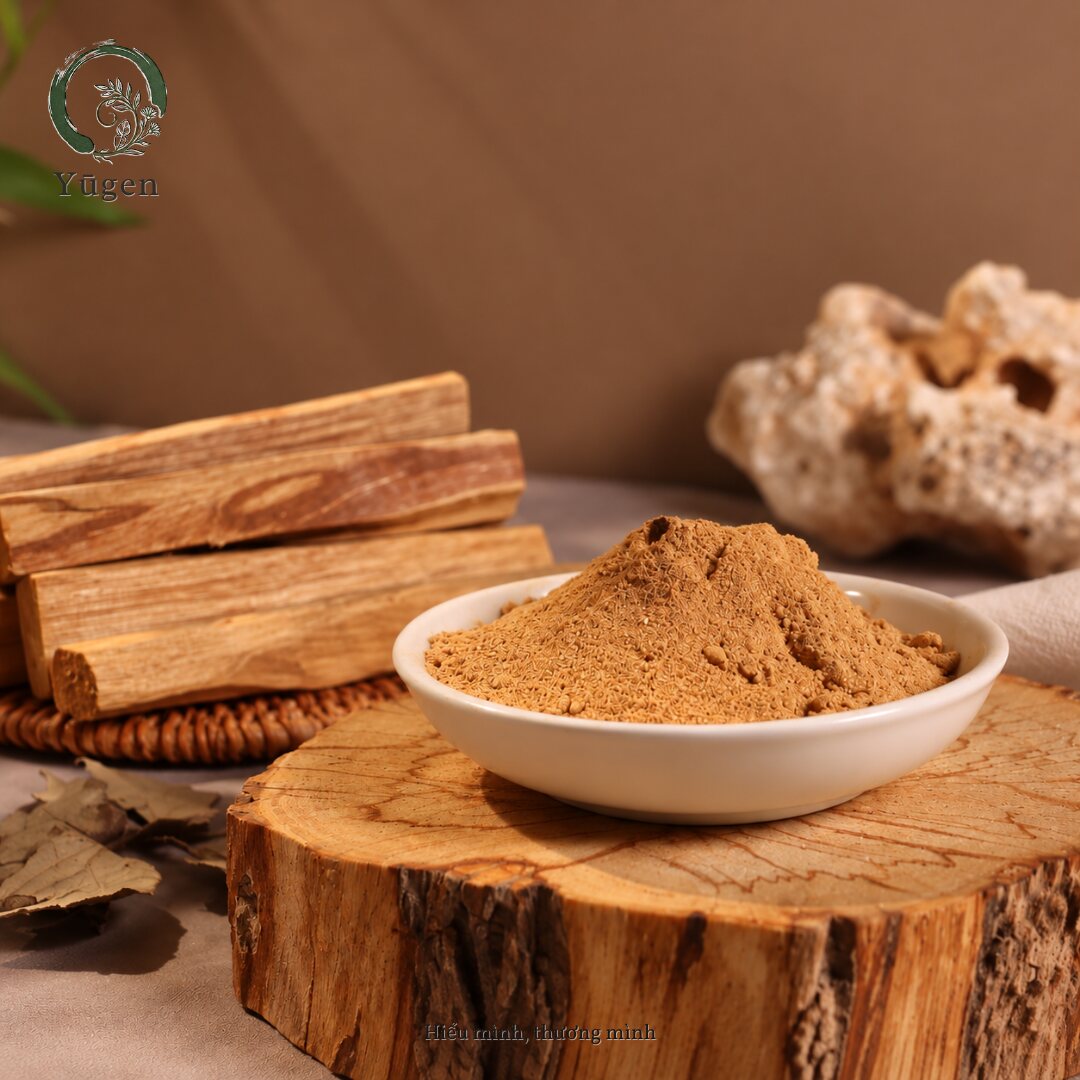
Herbal cones are made mostly from powdered natural materials such as wood, bark, leaves and resin, bound with a natural binder (for example litsea bark powder or resinous wood powder), then shaped and dried. The scent comes from the ingredients themselves, so it is rarely overpowering and varies slightly from batch to batch. These ingredients are covered in herbs in incense cones.

Many cheap incense products instead use sawdust as a base, soaked in synthetic fragrance oils for a strong smell, plus accelerants so they light easily and dyes so they look appealing. Synthetic fragrance is not automatically bad, but burned in large amounts it tends to produce harsh notes and thick smoke.

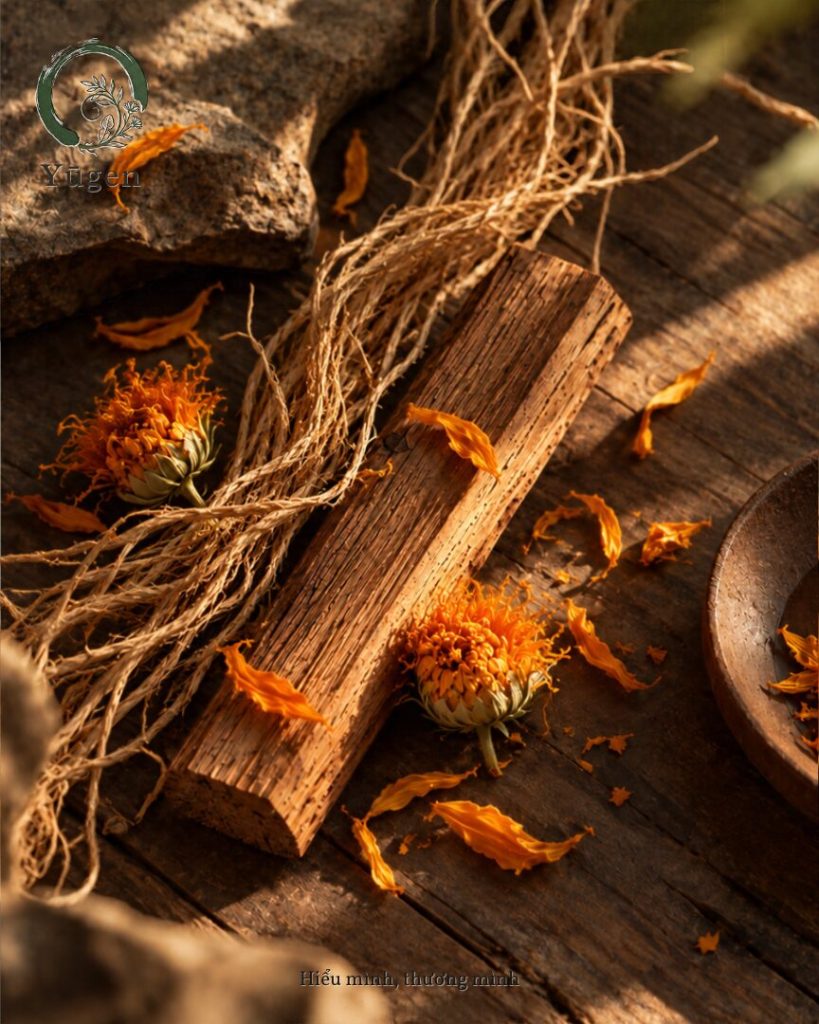
Rễ và hoa thảo mộc khô
Whole dried herbs: natural colour, gentle scent.

Five ways to tell at home

1. Smell it unlit

Unlit herbal incense smells faintly of wood, earth or dried leaves; you need to bring it close. If opening the box fills the room with sweet perfume, the cones have likely been soaked in fragrance oil.

2. Look at the colour

Natural ingredients give browns, reddish browns, grey-greens or earthy yellows, never perfectly uniform. Vivid pink, purple or bright green cones have usually been dyed. See also why incense cones come in different colours.

3. Watch the smoke

Herbal smoke is usually a fine, pale grey thread that rises softly and disperses quickly. Dense, billowing or yellowish smoke is a reason to think twice.

4. Notice the room after 30 minutes

This is the most reliable test. Herbal incense leaves a light, pleasant woody note that keeps fading. Synthetic incense often leaves a sweet, burnt smell that clings to curtains and clothes, and may bother sensitive noses and throats.

5. Check the ash

Herbal ash is usually fine, pale grey to off-white, and keeps the cone shape. Black, lumpy ash or an unburned core can point to lots of additives.

Reading the label

  • Specific ingredients: named herbs (mugwort, cinnamon, agarwood, soap pod…) rather than just “fragrance”. See reading an incense ingredient label.
  • Origin: transparent brands are happy to say where their materials come from.
  • No overblown claims: be wary of promises to cure illness. Fragrance supports a calm space; it is not medicine.
  • A sensible price: real agarwood or cinnamon has a cost. A suspiciously cheap “agarwood” box deserves a question.
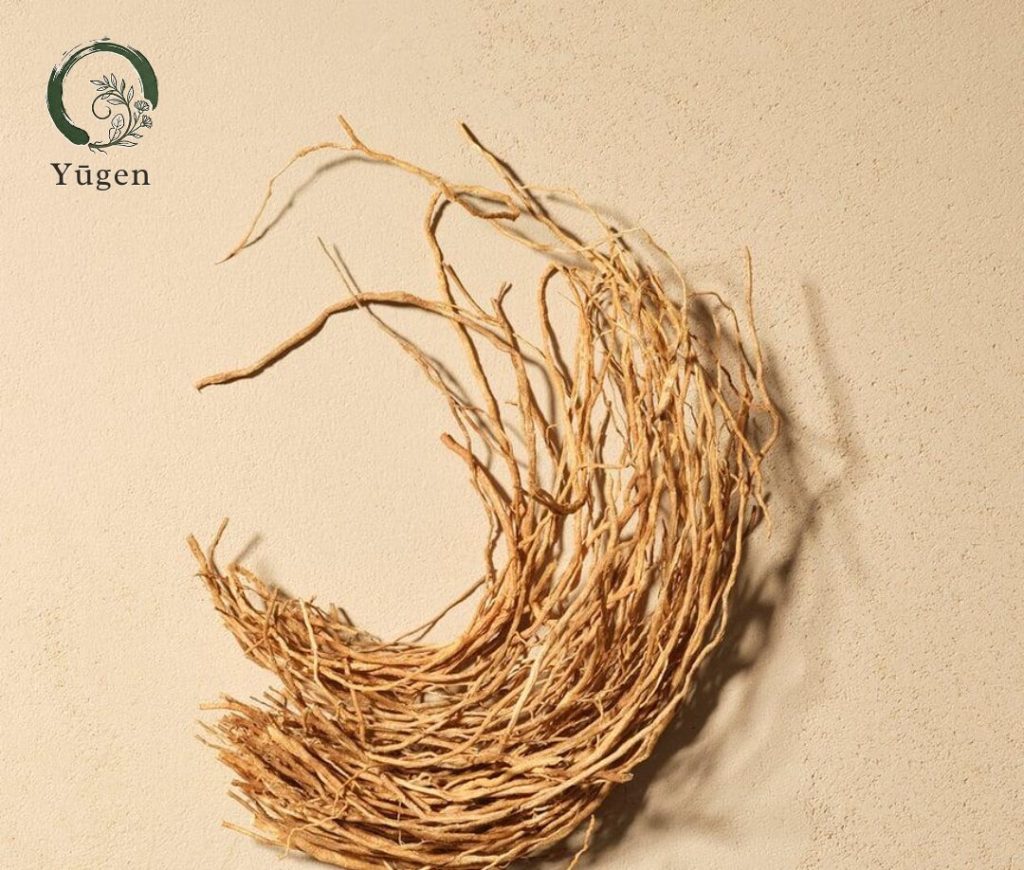
Rễ hương bài khô
Vetiver roots, a classic in Vietnamese handmade incense.

Why choose herbal cones?

Mostly for the experience. Herbal scent doesn’t dominate a room; it blends into it, like opening a window onto a garden after rain. You can burn one while reading, making tea or sitting quietly without feeling overwhelmed. For many people that is exactly the moment to know themselves and be kind to themselves.

At Yūgen, every cone is made from Vietnamese herbal powders, air-dried, with ingredients listed clearly. You could start with Kei cones, made from Australian sandalwood, vetiver root, litsea bark and blue lotus, or Shanta sticks, made from pine wood, vetiver root and litsea bark.

FAQ

Is herbal incense smoke-free?

No. All incense produces smoke when it burns; herbal smoke is simply lighter and gentler. Always burn it in a ventilated space.

Is herbal incense weaker?

Softer rather than weaker. The scent spreads slowly in layers, and you notice it more after a few minutes.

Is there a 100% sure test?

Not at home, since smell is subjective. Combine the clues above with choosing brands that list their ingredients.

Does the same apply to incense sticks?

Yes. Also check the core: an undyed bamboo stick is a good sign. Have a look at our Cinnamon Wood sticks.

Explore more herbal products in the Yūgen shop.

How to Choose the Right Incense Holder for Cones and Sticks

The right incense holder is made of a heat-resistant material (ceramic, stone or metal), matches the incense you use (regular cones, backflow cones or sticks), is wide enough to catch ash and sits steadily on the table. If you mainly burn backflow cones, choose a holder with a smoke channel; for sticks, choose a long tray or a holder whose hole fits the stick. The rest is aesthetics: pick the one that makes you want to sit down and light incense every day.

Why the holder matters

A holder isn’t just decoration. It keeps heat and ash away from your furniture, helps incense burn evenly and, for backflow cones, decides whether the smoke flows beautifully. The wrong holder can scorch a wooden surface, spill ash or let a cone go out halfway.

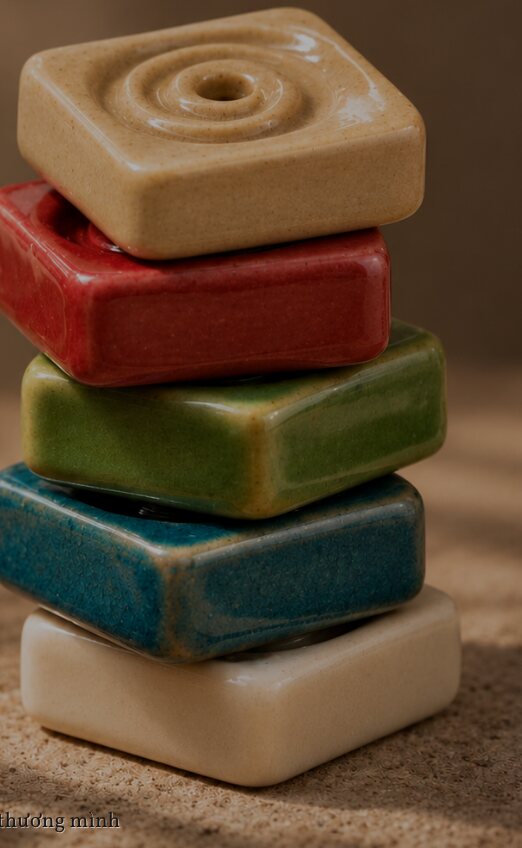
Đế gốm men nhiều màu
Glazed ceramic holders: heat-safe, easy to clean, lovely even unlit.

Choosing by incense type

Holders for regular cones

A small heat-resistant dish or cup with a shallow well is all you need. A thin layer of fine sand or incense ash at the bottom adds insulation and makes cleaning easier.

Holders for backflow cones

These need the most care. There must be a smoke hole directly under the cone, and a body shaped like a waterfall, mountain, pond or channel for the smoke to follow. The hole should be large enough for smoke but not so large the cone falls through. A smooth glaze lets smoke glide better than a rough surface.

Holders for sticks

Two common styles: a long horizontal tray that catches ash along the stick, or a small holder with a hole that keeps the stick upright or angled. Check that the hole fits the stick and the ash lands inside the tray. For our Cinnamon Wood sticks, a tray of about 25 cm works well.

All-in-one holders

If you use both cones and sticks, choose a holder with a stick hole and a wide well, or a ceramic bowl filled with sand where you can do both.

Comparing materials

Ceramic

The most popular: heat-resistant, easy to wipe and available in many shapes. High-fired, glazed ceramic resists smoke stains and lasts longer. Our glazed ceramic holder follows this approach, with a minimal, Japanese-inspired form. For the thinking behind them, read wabi-sabi and handmade ceramic holders.

Stone

Heavy, stable, well insulated and natural-looking. It is harder to shape, and porous stone can stain from smoke.

Metal (brass, cast iron)

Durable and classic, but it conducts heat and the base may get hot. Use a heat-resistant mat underneath.

Wood

Beautiful and warm, but only with a metal or ceramic ash-catching insert. Never set a cone directly on wood.

Nụ hương và nhang que trên đế gỗ
A wooden holder with an ash tray keeps the table clean.

Buying checklist

  • Heat-resistant material with no paint that peels when hot.
  • Flat, stable base that doesn’t wobble.
  • A well deep enough to keep ash off the table.
  • For backflow cones: a smoke channel and smooth surface.
  • Easy to clean, with few hard-to-reach crevices.
  • Sized for the space: small for a desk, a larger waterfall piece for the living room. For ideas, see styling a shelf with ceramic holders.

Cleaning and care

Let the holder cool completely, tip out the ash and wipe with a damp cloth. For stubborn resin, soak in warm water with a little baking soda, scrub gently with a soft brush and dry. Never plunge a hot holder into cold water: ceramic can crack from thermal shock. Full steps are in cleaning ceramic backflow holders.

FAQ

Can I burn regular cones on a backflow holder?

Yes, but without the downward smoke effect. Place the cone on a flat part of the holder.

Do I need sand in the holder?

Not required, but a thin layer insulates, holds sticks firmly and makes cleaning quicker.

How do I choose a holder as a gift?

Pick a simple shape and a neutral glaze that suits any room. The Yūgen gift set pairs a holder with incense, ready to give.

See all holders, cones and sticks in the Yūgen shop.

Incense cones vs. sticks: what’s the difference?

Incense cones vs. sticks: both are burning incense – both give smoke and scent – yet they feel quite different in use. One is compact, rich and quick; the other slender, long-lasting and wide-reaching. Knowing the difference helps you choose the right one for your room and your moment.

Nụ hương và nhang que trên đế gỗ
A cone (left) and a stick (right): same incense, different rhythm.

Cones: small, rich, close-range

Cones are hand-shaped from herbal powder, wood and natural binders. Because they are dense, they release a stronger scent over a shorter time, usually 15–25 minutes. The smoke rises in a fine thread from a small ceramic holder – perfect for a desk, reading nook, bedroom or bathroom.

Backflow cones have a hollow base, so the smoke flows downward like mist over a special holder – something to watch as well as smell. For the details, see burning incense cones safely.

Sticks: slender, long, wide-reaching

Sticks have a bamboo core coated in incense paste, or come coreless in the Japanese style. They burn slowly, typically 30–45 minutes, with smoke that rises high and spreads evenly through larger spaces – a natural fit for living rooms, meditation or long working sessions. Don’t forget to choose a suitable incense holder.

So sánh thời gian cháy nụ hương và nhang que
Typical burn time: cones 15–25 minutes, sticks 30–45 minutes.

Incense cones vs. sticks at a glance

Cones Sticks
Burn time 15–25 min 30–45 min
Intensity Rich, focused Lighter, even
Reach Small rooms, corners Large rooms, open spaces
Holder Small ceramic dish Stick holder with ash tray
Best for Short breaks, reading, before sleep Meditation, long work, guests

Which one should you choose?

Ask yourself two things: how big is the room, and how long do you want the scent to stay. A small room and a short pause – choose a cone. A large room or a scent that lasts all session – choose a stick. Many people keep both: cones for quiet evenings, sticks for working mornings.

Whichever you pick, the ingredients shape the experience. Incense made from natural herbs and wood gives a softer smoke and an earthy scent that never catches the throat. See how to tell herbal from chemical incense. Not sure where to start? Try Yūgen’s three-question scent finder.

FAQ

Which burns longer, incense cones or sticks?

Sticks burn longer, typically 30–45 minutes, while cones usually burn for 15–25 minutes.

Should I choose cones or sticks for a small room?

For a small room and a short pause, choose a cone. A large room or a scent that lasts a whole session suits a stick.

How is a backflow cone different from a regular cone?

A backflow cone has a hollow base, so the smoke flows downward like mist over a special holder.

Neither is better. Each simply suits a different rhythm of life.

How to burn incense cones

Incense cones are small and easy to use, yet a few right moves make all the difference: even smoke, a full scent and tidy ash. Lighting in a hurry or placing a cone in the wrong spot often means it goes out halfway, smells burnt or burns too fast. Here is how to burn incense cones: three basic steps, where to place your cone, and the common mistakes to avoid.

Ba bước đốt nụ hương
Place – light – blow out. When the tip glows red, the smoke begins.

Before you light

You need three things: a cone, a heat-safe holder (ceramic, stone or metal) and a lighter or matches. A holder with a shallow dip or ash tray keeps the table clean. If you only have a porcelain dish, add a thin layer of sand or rice underneath for insulation. Need a new one? Browse the Yūgen shop.

Choose a flat surface away from curtains, paper, fabric, children and pets. Avoid spots right under a fan or next to a draughty window: wind makes the cone burn fast and thins out the scent. A sheltered but airy corner is ideal.

How to burn incense cones: three basic steps

  1. Set the cone on the holder. The base should sit flat so it stands upright.
  2. Light the tip. Hold the flame to the point for about 10 seconds, until it catches evenly.
  3. Gently blow it out. The tip turns to a red glow and a thin thread of smoke rises. The cone now smoulders slowly down to the base.

A cone usually burns for 15–25 minutes depending on its size and the humidity. Nothing else to do: sit down and let the scent spread.

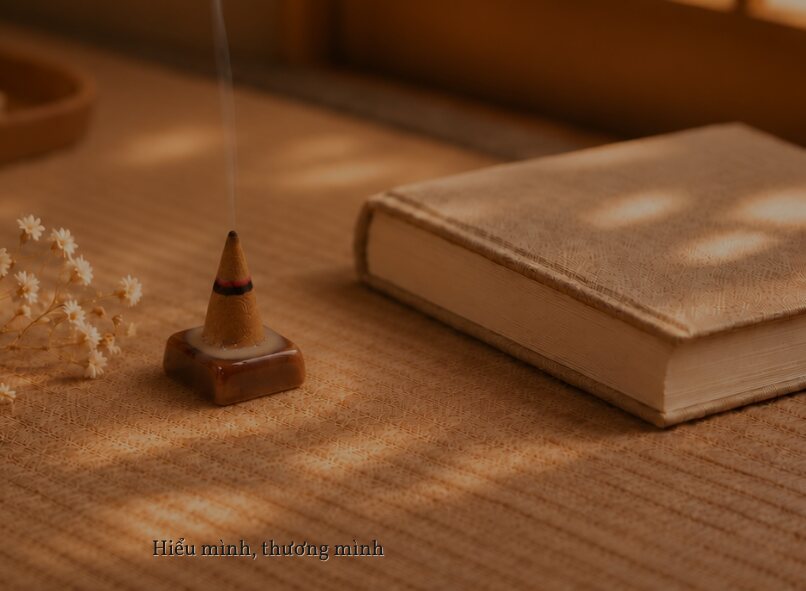
Nụ hương cháy bên cuốn sách
One cone is enough for a chapter, or a slow cup of tea.

Cone went out? Here is why

  • Not lit long enough: only the surface caught. Hold the flame a few seconds longer next time.
  • Damp cones: humid weather makes cones absorb moisture. Air them in a dry spot for half a day, or store them in a closed box with a desiccant.
  • A cold metal holder: thin metal draws heat from the base, so the last bit may not burn. That is normal and does not affect the scent.

If it goes out, simply relight from where it stopped: light, wait, blow out. More causes in why incense cones go out mid-burn.

After it burns down

Wait about 10 minutes for the ash to cool before emptying. Wipe the holder with a dry cloth; glazed ceramic can be rinsed and dried. Open a window for a while afterwards to refresh the air – the lingering scent will feel softer. See ventilation basics for burning incense.

Safety notes

  • Never leave a burning cone unattended. See fire safety with incense.
  • Keep away from children, pets, curtains, paper and anything flammable.
  • In a small, closed room one cone is plenty. If you are sensitive to smoke, burn in a well-ventilated space.

FAQ

How long does one incense cone burn?

Usually 15–25 minutes, depending on its size and the humidity of the air.

Can I relight a cone that went out?

Yes. Simply relight it from where it stopped, with the same light, wait, blow-out routine.

Where is the safest place to burn a cone?

Choose a flat surface away from curtains, paper, fabric, children and pets, and avoid spots right under a fan or beside a draughty window.

Burning incense well is not hard. Slow down for a few seconds when lighting; then let the scent do its work.

Reading an Incense Ingredient Label: Fragrance Oil, Charcoal and KNO₃

The incense ingredient label is usually short, but every word is worth reading. Three phrases turn up most: “fragrance oil”, charcoal, and potassium nitrate (saltpetre, KNO₃). Understanding them helps you know what you are burning, not to frighten you, but so that your choice is deliberate.

This guide does not judge any product. It simply explains what each term means so you can decide for yourself.

Start with one principle: the more specific, the better

A good label tells you exactly what is inside: “agarwood powder”, “cinnamon bark”, “vetiver root”, “bời lời bark powder”. A vague label says only “natural ingredients” or “fragrance” without saying what. Both are legal, but the first gives you far more to go on. Colour is a clue too, see why incense cone colours differ.

Order matters too. In many places ingredients are listed from most to least by weight, though not every product follows that. If you can, check whether the main material is at the top of the list or tucked at the bottom.

Finally, see whether the label gives an origin, a maker and a contact. A brand that puts its name on the product is usually willing to answer questions.

A cone box and the ingredient information on its label

“Fragrance” and “fragrance oil”: one phrase, several meanings

“Fragrance oil” generally means a ready-made blend of scent compounds. It can contain natural essential oils, synthetic aroma chemicals, or both, and the maker is not required to list each one. That is different from “essential oil”, which is extracted from a specific plant.

Why do many makers use fragrance oil? It is cheap, stable, and can produce scents nature rarely offers, such as “fresh bread”, “rain” or “ocean”. Synthetic scent is not automatically bad. But when burned, the aromatic compounds are heated and carried in the smoke, so if you want a woody, natural note, prefer a label that names real materials over a generic “fragrance”.

A small tell: incense made from dry materials tends to smell soft before lighting and changes as it burns. Incense dipped in fragrance oil often smells loud at the start, then fades quickly.

Charcoal: easier to burn, but it changes the smoke

Wood charcoal is a common burning base in many everyday sticks and cones. With charcoal as the base, the product lights easily and burns evenly, and the maker only has to add scent. The result is that what you smell comes almost entirely from the added fragrance, not from the material burning. On what holds the cone together, see natural binders in incense cones.

In traditional herbal incense, the body is the wood and herb powder itself. It is harder to keep burning, but the scent is the scent of the material. Both have a place, but you should know which you are choosing. Charcoal is often recognised by a deep, even black colour and thin, crumbly ash.

Named, specific ingredients are always easier to trust

Potassium nitrate (KNO₃): a burn aid

Potassium nitrate, or saltpetre, is an oxidiser. It supplies extra oxygen so a cone keeps burning and does not go out halfway, especially with powders that are low in oil or packed tightly. Some recipes use a small amount, others none.

To be straightforward: not every incense with KNO₃ is poor, and not every one without it is perfect. The difference lies mainly in how it burns. Incense with a burn aid usually burns more evenly but can have a faintly scorched note of its own. Incense without it is more likely to go out in damp air or a draught, so it needs a dry, still spot.

Many makers do not say whether they use it. If it matters to you, ask directly. A transparent maker will answer calmly.

A quick reading table

On the label Usually means Worth noticing
Agarwood, cinnamon, vetiver… Real materials, named Origin, how specific
Bời lời bark, makkō Bark-based binder Often a good sign
Fragrance, fragrance oil Ready-made scent blend Ask if it is natural essential oil
Charcoal Charcoal burning base Scent comes from added aroma
KNO₃, potassium nitrate Burn aid Burns more evenly, scent may differ
Colourant, dye Colour added Ask what kind

Label read, what next?

No label replaces experience. Light one cone beside an open window and breathe slowly. If the scent is soft, the smoke gentle and you feel at ease, label and nose agree. If your eyes sting, your throat dries or your head aches, put it out, open the window and stop using that product. Whatever the label, read ventilation basics for burning incense.

Remember that all smoke carries fine particles from combustion, however natural the materials. Ventilation and moderation always come with the deal. If you have a respiratory condition, are pregnant or have small children at home, ask your doctor first.

We make Yūgen cones from plant-based materials and name our scent groups (Woody, Herbal, Agarwood, Soft & sweet) by feeling, not by a vague formula. Try the scent finder or browse the shop to read each product’s ingredients.

FAQ

What does “fragrance oil” on a label mean?

It is one phrase with several meanings; the more specific the list, the easier it is to understand.

What is KNO₃ in incense?

Potassium nitrate (saltpetre, KNO₃) is a burn aid.

What does charcoal do in incense?

It makes incense easier to burn but changes the character of the smoke.

Reading a label is the politest way to ask: what am I about to breathe?

Storing Incense Cones in Humid Weather

The simplest way to store incense cones in humid weather is a sealed jar with a desiccant sachet, kept somewhere cool and dry, out of direct sun. Cones made of herbal and wood powders take on moisture quickly, so high humidity is their main enemy.

This guide covers why incense absorbs damp, how to store it step by step, and what to do when a cone has gone soft or mouldy.

Why the nồm season is hard on cones

Nồm is the muggy weather of late winter and early spring in northern Vietnam, when the air is so saturated that floors and walls seem to sweat. On these days indoor humidity can climb above 90%, enough that laundry will not dry and wooden furniture grows spots of mould. The south and centre have similar long, wet stretches in the rainy season. Damp cones tend to quit early, see why incense cones go out mid-burn.

Cones are made of ground wood, roots, bark and dried leaves, all materials that naturally draw water vapour from the air. The bark binder does the same. When a cone absorbs moisture, three things tend to follow: it turns soft and tacky, it is hard to light or goes out halfway, and in the worst case it grows mould. The scent also fades or takes on a damp, musty edge.

The good news is that all of this can be prevented with a few small habits.

Keeping cones in a sealed box somewhere dry

How to store incense cones in humid weather: four steps

  1. Use a sealed jar. A glass or ceramic jar with a rubber gasket lid, or a tin with a tight lid, works well. A sealed plastic container is fine too, but glass holds no stray odours.
  2. Add a desiccant. A silica gel sachet, placed at the bottom of the jar or tucked beside the lid. Replace or re-dry it when it changes colour or is full, following the packaging instructions.
  3. Avoid direct sunlight. Sun warms the jar, causes condensation inside and drives off the lighter scent notes. A cupboard shelf or a shaded spot is enough.
  4. Keep away from water vapour. Kitchens, bathrooms, the washing machine and a dripping air conditioner are best avoided.

A safety note: desiccant sachets are not food. Keep them away from small children and pets, and never mix them in with food containers.

When to open the jar

A small but useful detail: do not open the jar at the muggiest moment, right beside an open window. Damp air will rush in. Take out the cone you need, close the lid, and only then carry the cone away to burn. If you can, open the jar when the air is drier, with a dehumidifier running or after using the air conditioner’s dry mode. Dry your holders too, see cleaning ceramic backflow holders.

Cones you took out but did not use should go back in the jar rather than stay on a ceramic holder overnight. A cone left in damp air for a few hours will probably be fine, but several days will certainly draw moisture.

Open the jar briefly, take what you need, close it again

A damp cone: can it be rescued

It depends on how far it has gone. If a cone is only slightly soft or limp, with no odd spots, you can try this:

  • Spread the cones on a clean tray or plate lined with paper.
  • Leave them somewhere dry and airy, in shade, usually for one to a few days, until they firm up again.
  • You may place them near a dehumidifier or in a room using the air conditioner’s dry mode. Avoid strong heat, which can crack cones and drive off scent.
  • Then store them in a sealed jar with a fresh desiccant.

If you see white, green or grey patches, or smell a clear mouldy odour, throw that cone away. Do not burn mouldy cones: you cannot know which fungus is present, and the smoke will carry spores around the room. Anyone with sensitive lungs should be especially careful.

Holders and tools need to be dry too

Ceramic absorbs less than cones do, but if a holder sits in a damp corner, its base will pass that damp to the cone. Before burning, wipe the holder dry, especially the dish that holds the cone. With backflow holders, keeping the inner body dry helps the cone burn more steadily. For heat and humidity, read humidity and scent.

A few other humid-season habits help: wipe shelves with a dry cloth, open a window briefly when the air turns drier, and do not pack too many incense jars into a closed cupboard with no gaps.

If you are choosing cones for this time of year, the Woody and Agarwood groups tend to feel warm and dry, while the Herbal group is lighter. Browse the shop or try the scent finder.

The short version

  • Sealed jar, desiccant, a cool place away from the sun.
  • Open quickly, take what you need, close again.
  • Slightly damp cones: dry them in the shade. Mouldy cones: discard.
  • Always open a window when you burn, even on a muggy day.

FAQ

How should I store incense cones in humid weather?

Use a sealed jar with a desiccant sachet, kept cool and dry, away from direct sun.

Why is the nồm season hard on cones?

Humidity can be above 90%, and cones made from herbal and wood powders take on moisture.

When should I open the jar?

Open it when you need a cone and close it again right away; avoid opening on very damp days.

Keeping incense dry is another way of keeping the house calm.

Why Incense Cones Go Out Mid-Burn, and What to Do

When an incense cone goes out halfway, it usually has one of three causes: the cone has absorbed damp, the air around it is too still, or the tip was not lit evenly. The fix is simple. Let the cone dry, move it somewhere with gentle airflow, and relight it from the tip.

It is a very common thing, even with carefully made incense. Knowing why it happens helps you enjoy a cone from start to finish.

How a cone burns

An incense cone has no flame. When you light the tip it catches, then smoulders as a small glowing dot. That dot is the burning zone. Its heat warms the powder just beneath it, releasing scent and also igniting the next layer. The glow travels from the top down to the base. If damp is the suspect, read storing incense cones in humid weather.

For this to keep going, three things must be present: powder dry enough, enough oxygen around it, and enough heat from the glow to pass on to the next layer. Lose one, and the glow weakens and goes out.

So when a cone goes out, the right question is not “is this cone good or bad” but “which condition is missing”.

A small glowing dot travels from the tip down to the base of the cone

Why an incense cone goes out: common causes

1. A damp cone

This is culprit number one, especially in the humid nồm season or the rainy months. The powder draws water from the air, and that water has to evaporate before the powder burns, so the glow loses heat and dies. Signs: the cone feels slightly soft, is hard to light, or burns a short way and stops.

2. Air that is too still or too drafty

Both extremes cause trouble. A closed room lowers the oxygen around the cone, especially if several are burning at once. A draught from a fan or window cools the glow or makes it burn lopsided. The ideal is gentle air movement that does not blow straight at the cone.

3. An unevenly lit tip

If the flame only brushes past, the glow may catch on just one side of the tip. When heat cannot spread, it fades. Hold the flame on the tip for a few seconds, until a ring of red glow shows all the way round. For airflow around the cone, see how incense smoke moves through a room.

4. Ash blocking the glow

With a small ceramic dish, ash from a previous cone, or from this one, can pile around the base and block air. Wipe the dish clean between burns.

5. A cone that is crooked or touching the wall

A tilted cone, or one leaning against the side of the dish, loses heat into the cool ceramic. Stand it firmly on a flat surface, with a little room around it.

Lastly, a cone may sometimes be cracked or have a hollow inside, so heat cannot cross the gap. With handmade cones that happens occasionally and does not mean something serious is wrong.

What to do once a cone has gone out

  1. Do not relight in a hurry. If it is still smouldering, wait until the smoke stops, then touch gently to be sure it has cooled.
  2. Check dryness. If it feels soft or damp, leave it somewhere dry and airy for one to a few days before using it.
  3. Brush off dark ash and check the tip. Gently flick away the soft ash at the tip to reveal unburnt powder. If that part is clean, you can relight.
  4. Relight from the pointed tip. Hold the flame for a few seconds until there is an even red ring, then blow out any flame.
  5. Put it back somewhere lightly airy. Crack a window, avoid a direct draught, and wipe the dish clean.

If a cone keeps going out even after all this, it may be damp deep inside. Drying it for longer is the right choice, and if there is a musty smell or odd spots, discard it.

A cone standing upright in gentle airflow burns to the end

How to help a cone burn to the end

  • Store cones in a sealed jar with a desiccant, especially in humid months.
  • Burn in a room with soft airflow, no draught, and a window slightly open.
  • Burn one cone at a time, and clean the dish between burns.
  • Hold the flame on the tip long enough before letting go.
  • Use cones that are dry, firm and smell clean.

Remember that ventilation does not only help the cone burn, it helps you breathe more easily. All smoke contains fine particles, so an airy room is a basic condition for every session. For a well-aired room, read ventilation basics for burning incense.

Do not be too hard on a cone

Some days a cone burns its full fifteen minutes. Some days it goes out halfway, and the weather that day was probably just a little damper. A cone that goes out is not a failure. It reminds you to check the air around you, which is another way of slowing down.

If you would like to try scent groups for your own rhythm, browse the shop or let the scent finder help.

FAQ

Why does an incense cone go out halfway?

Usually the cone has absorbed damp, the air around it is too still, or the tip was not lit evenly.

What should I do with a cone that went out?

Let it dry, move it somewhere airier and relight from the start.

How can I help a cone burn to the end?

Keep cones dry, give them some airflow and light the tip evenly.

Even when the cone goes out, the room keeps a faint trace of scent to remember it by.

Cleaning Ceramic Backflow Holders: Warm Water, Baking Soda, Soft Brush

Here is how to clean a ceramic backflow holder gently. After many burns, a ceramic backflow holder tends to collect a dark, slightly sticky film of smoke residue, loosely called tar, on its body, its smoke channels and the base of the dish. The gentlest way to clean it is a wipe or soak in warm water with baking soda, a soft brush, and a full dry before the next use.

Done regularly, it takes only a few minutes, and the holder keeps both its looks and a steady backflow.

Why ceramic holders get dirty

Incense smoke is not only gas. It also carries tiny droplets of resin and fine particles formed as wood powder smoulders. When smoke passes over ceramic, some of it condenses and sticks, much like soot on a wood stove. Over time the film darkens, turns tackier and dulls the glaze. Keep holders dry along with cones, see storing incense cones in humid weather.

On a backflow holder the issue is more visible, because smoke must flow through narrow passages, a hole in the middle and channels around the body. As residue builds in these spots, the smoke slows, the waterfall is less smooth than at first and sometimes it clogs altogether. Crumbs of ash falling into the dish also help block the air path.

So regular cleaning is not just for looks. It lets the holder work as designed.

Glazed holders need gentle care after many burns

What you will need

  • Warm water, not boiling.
  • Baking soda, about one to two teaspoons to a bowl of warm water.
  • An old toothbrush or other soft brush.
  • Cotton buds, a thin bamboo skewer or a toothpick for narrow channels.
  • A soft clean cloth and paper towel.

Avoid steel brushes, scouring pads, strong cleaners, bleach and toilet-bowl products. They can scratch or dull the glaze, and leftover chemicals may be released when you burn.

How to clean a ceramic backflow holder, step by step

  1. Let the holder cool completely. Never put hot ceramic in water, since it can crack from thermal shock. Wait at least a few hours after the last burn.
  2. Clear the ash. Tip dry ash onto paper or wipe it gently with a dry cloth.
  3. Mix the solution. Stir baking soda into a bowl of warm water until dissolved.
  4. Wet and wait. Lay a cloth soaked in the solution over the residue for 5 to 10 minutes to soften it. For thick residue you can soak the glazed parts, but see the notes below.
  5. Brush gently. Brush in one direction with a soft brush. Use cotton buds or a bamboo skewer to reach channels and the smoke hole, without prying hard.
  6. Rinse. Rinse in clean warm water until the slickness and soda smell are gone.
  7. Dry. Wipe with a soft cloth, then stand it upside down to drain somewhere airy, out of harsh sun.
Every handmade glaze is different, and use leaves its own marks

Important notes

Glazed and unglazed areas

Most glazed holders have a glossy surface that wipes clean easily. But many have an unglazed base or rim, bare ceramic. That part absorbs water and residue more readily. For bare areas, use a damp cloth rather than a long soak, and dry thoroughly.

Residue in the smoke path

This is the hardest spot. Be patient: apply the solution, wait, and brush a few times rather than trying to get it perfect in one go. If the residue is very hard, repeat the next day. Handmade ceramics have their own beauty, see wabi-sabi and handmade ceramic holders.

It must be fully dry

Ceramic holds water in its body. If you burn while it is still damp, rising moisture can put the cone out, and water in the channels can block the smoke. Let it dry for at least a night. In humid weather it may need longer, so place it near a dehumidifier or in a room using the air conditioner’s dry mode.

No dishwasher

High heat, strong detergent and knocks can damage the glaze or crack small details. Washing by hand is safest.

How often to clean

There is no fixed number, since it depends on how often you burn. A simple guide:

  • After every burn: empty the ash and wipe the dish with a dry cloth.
  • Every week or two: wipe the body with a damp cloth.
  • Monthly, or when the smoke flows slowly: do a full clean as above.

It is only a suggestion. If the smoke flows poorly, or the residue starts to feel sticky on your fingers, it is time for some care. For displaying them, see styling a shelf with ceramic holders.

A small ritual after burning

Many people find that after wiping their holder, they feel lighter, as though they had tidied a small corner of the mind. For those who love slowness, this is not quite a chore but the second half of the session: a thank-you to the holder that kept you company. Handmade glazes differ from piece to piece, and your care slowly gives each one its own marks of use.

If you are looking for a new holder, see the shop for glazed ceramics with cones to match, or the gift boxes if you wish to give one. And remember to open a window each time you burn, so smoke and damp both have somewhere to go.

FAQ

How do I clean a ceramic backflow holder?

Use warm water, baking soda and a soft brush, then let it dry fully.

Why do ceramic holders get dirty?

After many burns, smoke residue forms a dark, slightly sticky film, loosely called tar.

How often should I clean it?

It depends on how often you burn: empty the ash and wipe the dish after each burn, wipe the body every week or two, and do a full clean monthly or when the smoke flows slowly.

Caring for small things each day is how we learn to care for ourselves.

Ventilation Basics for Burning Incense

All incense smoke, however natural the ingredients, comes from combustion and contains fine particles. The simplest and most effective way to reduce smoke at home is good ventilation when burning incense: open a window, burn in moderation and place the incense where air can move.

This guide is not meant to worry you. It is meant to help you enjoy incense with a clear head: why ventilation matters and how to do it well.

What is in incense smoke

When any organic material smoulders, from wood to leaves to tobacco, it creates a mixture of gases and tiny particles. A 2022 scientific review by Yadav and colleagues in the Journal of Inflammation Research gathers many studies on incense smoke and reports that burning incense releases particulate matter (PM), volatile organic compounds and gases such as carbon monoxide. The authors argue that repeated exposure, especially in enclosed spaces, deserves attention. You can read the abstract of the review for more detail.

It is worth stating the limits. This is a review, and many of the studies in it look at heavy, long-hours burning such as in temples or homes that burn daily, not an occasional cone in an airy room. The level of risk depends on how much is burned, for how long, in what space, and on each person’s health. But the practical message is clear: moving air thins the smoke.

Fine, light smoke needs moving air to thin out

Ventilation when burning incense: simple habits

  1. Open a window while burning. Even a small gap helps, and two openings on opposite sides, so air moves gently, is better.
  2. Burn in a larger room with a high ceiling. Smoke concentrates faster in small, tight rooms.
  3. One cone at a time. Several at once raise the amount of smoke quickly.
  4. Do not sit right beside the smoke. Keep at least an arm’s length, and put the incense on the side where air flows out.
  5. Never burn while asleep or away. For fire safety as well as because smoke builds up.
  6. Leave the window open a while after the cone is out. Let leftover smoke clear before you close up.

A few small details are worth remembering. First, a cone usually burns for around fifteen to twenty-five minutes, so you do not need to burn all evening; treat a cone as a timer for a short pause. Second, avoid placing incense right under a fan or air conditioner, since a strong draught spreads smoke across the room instead of carrying it out. Third, if someone is asleep or unwell at home, burn in a corner far from them, or on a balcony or porch.

If your space is small, read more about incense for a small apartment or studio and how incense smoke moves through a room.

Does an air purifier help?

Air purifiers with HEPA filters are commonly used to reduce fine particles indoors, and many studies of indoor air quality discuss their effect on particles. They are a useful supplement, especially when you cannot open windows much, in a polluted city or on a cold day. But a purifier does not replace ventilation: it brings in no fresh air, and its effect depends on room size, capacity and replacing the filter on time.

If you use one, choose a unit suited to your room’s size, keep it unobstructed and change the filter as the maker recommends.

Smoke drifting on a gentle current of air

When to cut back or stop

Put the incense out and open the windows if you notice stinging eyes, coughing, a dry throat, headache or any difficulty breathing. Everyone is sensitive in different ways, and your own symptoms are more reliable than any rule. For people with respiratory conditions such as asthma, older adults, pregnant women and households with small children, please ask a doctor first, and favour burning less, further away, or not in shared living rooms.

This is not personal medical advice, only the usual sensible precautions.

For sensitive lungs, see our note on incense smoke and sensitive lungs.

Ventilation and slow living

Here is something nice: opening the window does not take away the calm of a session. Many people find that the sound of wind, the light outside and the smell of the afternoon become part of the experience. Incense needs air to burn, and we need air to breathe. Both need room.

At Yūgen we choose plant-based materials and keep recipes simple, but we do not claim that incense smoke is harmless. What we believe in is burning with awareness: just enough, airy and unhurried. If you are looking for cones to begin with, see the shop or try the scent finder.

FAQ

Do I need to open a window when burning incense?

Yes, it helps. Even a small gap works, and two openings on opposite sides are better because air moves gently through the room and the smoke thins out. Keep the window open a while after the incense goes out so any leftover smoke can leave.

Can an air purifier replace an open window?

No. A HEPA purifier can help reduce fine particles, but it does not bring in fresh air, and its effect depends on room size, capacity and timely filter changes.

How many cones should I burn at once?

One at a time is enough. A cone usually burns for about fifteen to twenty-five minutes, so there is no need to burn them all evening, and several cones at once raise the amount of smoke quickly.

An open window is the first part of a good incense session.